












Nigeria’s oil sector is recording improved recovery as reduced crude theft boosts production, strengthens revenue prospects, and supports renewed investment across the industry, DARE OLAWIN writes.
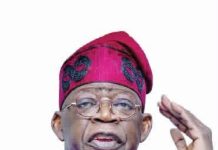
President Bola Tinubu’s October 1, 2026 Independence Day broadcast highlighted the difficult economic conditions Nigeria faced when he assumed office in 2023 and the changes recorded in some key macroeconomic indicators.
The President said the economy grew by more than four per cent this year, while oil theft declined and inflation fell substantially from its peak.
For stakeholders, the reduction in oil theft has also been linked to efforts to secure oil infrastructure in the Niger Delta, including the operations of Tantita Security Services Nigeria Ltd.
When Tinubu assumed office in 2023, Nigeria’s economy faced significant challenges, with inflation approaching 35 per cent, strained external reserves, weakened investor confidence and rising cases of oil theft.
Speaking on the economic situation and the reforms undertaken by his administration, Tinubu said the country had begun to move away from those difficulties.
“Our journey has not always been easy. In truth, it has generally been too hard for too many. We have known moments of great hope and periods of profound disappointment. We have endured war, military rule, economic crises, insecurity and political upheaval. Yet through it all, Nigeria, with the indomitable spirit of its people, has endured.”
Highlighting the performance of the economy, the President said, “Our economy has grown by over four per cent this year. Both oil and non-oil sectors have contributed to the renewed period of stable growth. Oil theft is down. Inflation has fallen substantially from its peak.”
He added, “Our foreign reserves have been rebuilt, our foreign exchange market has stabilised, and in 2025 this country recorded its highest revenue from non-oil exports in its history, exceeding $6 billion. This is real money being made by real Nigerian businesses.”
On the next phase of the economic programme, Tinubu said, “Our priority is to bring down the cost of living. We will achieve this by lowering the cost of producing and moving the things Nigerians consume”.
He also highlighted the role of government at the sub-national level in providing essential services.
“That is why, working with our states and local governments, we will continue to strengthen primary healthcare, basic education, and the essential public services poorer Nigerians depend on most. Since 2023, we have paid salaries and pensions on time and in full. We have reformed the national pension program to benefit retirees and the vulnerable,” he said.
Sustaining oil production
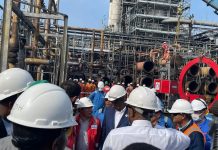
Against this backdrop, efforts to reduce oil theft remain important to sustaining oil production and the revenue generated from the sector. Tantita Security Services Nigeria Ltd was appointed by the Federal Government to protect oil assets and support peace and stability in the Niger Delta.
Tinubu appointed TSSNL, led by High Chief Government Ekpemupolo, alias Tompolo, to protect Nigeria’s oil assets in the region. The company works with other security outfits in securing oil infrastructure and combating activities that affect oil production.
Its operations include monitoring oil pipelines, tracing illegal connections, identifying crude-theft points and reporting suspected illegal refining activities to security agencies for enforcement.
The company has said it uses technology as part of its security operations, including surveillance systems, real-time monitoring, threat detection and communication systems.
Tantita said its surveillance infrastructure includes high-resolution cameras with night vision and thermal imaging, while remote monitoring allows authorised personnel to access live footage. It also said cameras equipped with motion sensors and artificial intelligence capabilities can detect unusual activities and trigger alerts for immediate response.
The reduction in oil theft has also coincided with efforts to raise oil production and attract fresh investment into the sector.
Nigeria’s push to revive investment in its deepwater oilfields gained momentum as the Nigerian National Petroleum Company Limited and its partners signed agreements expected to move the proposed Bonga Southwest/Aparo project closer to a Final Investment Decision.
The project, located in Oil Mining Lease 118, is expected to attract up to $21bn in investment, with projected peak production of about 175,000 barrels of oil per day and 140 million standard cubic feet of gas per day.
Oil firms partner
NNPC Ltd and the OML 118 Contractor Parties, Shell Nigeria Exploration and Production Company Limited, Esso Exploration and Production Nigeria (Deepwater) Limited and Nigerian Agip Exploration Limited, executed an Addendum to the OML 118 Production Sharing Contract and an Addendum to the Dispute Settlement Agreement.
President Bola Tinubu also approved the Deep Offshore Oil and Gas Projects Incentives (Tax Remission) Order, 2026, designed to improve the competitiveness of Nigeria’s deepwater fiscal regime and unlock fresh investments.
Related News
W’Bank: Naira proves more resilient than several African currencies
Amnesty programme scholarship beneficiaries rise to 9,000 – Otuaro
Tinubu’s extended absence
The Chief Executive Officer, Centre for the Promotion of Private Enterprise, Dr Muda Yusuf, said reforms in the oil and gas sector had had a significant positive impact on oil production and output.
“The oil production surge has contributed to the improvement in external reserves. It has impacted the capacity of the CBN to stabilize the naira, and it has contributed generally to macroeconomic stability.
“So, the improvement in oil output and the improvement in security in the oil-producing area have also been a major development that we need to recognize as part of the key achievements of the administration,” he said.
Yusuf also pointed to efforts to attract investment into the oil and gas industry. According to him, the deregulation of the downstream sector had contributed to the success of the Dangote Refinery.
“Because if we don’t have the right deregulation environment, such a major refinery may also have to struggle,” he said. The refinery, he added, has opened the way for other refineries and investors to come on board in the oil and gas space. “So quite a lot has happened within the oil and gas space, both in the upstream, the midstream, and the downstream,” he stated.
Broad economic reforms
The broader economic reforms have also included monetary and foreign exchange measures aimed at addressing inflation and improving market stability. The Central Bank of Nigeria under Olayemi Cardoso tightened monetary policy, raising rates by more than 800 basis points and strengthening liquidity management.
It also halted central bank financing of government beyond statutory limits and re-anchored monetary policy on its core mandate.
On foreign exchange, the CBN introduced a willing-buyer, willing-seller framework, unified exchange-rate windows and cleared the backlog of verifiable FX commitments. External reserves have risen above $55.6bn, while new channels for diaspora remittances and investments have also been created.
The reduction in oil theft, improved oil production and renewed investment interest have therefore become part of the broader changes in Nigeria’s oil and gas sector.
Chairman of the House Committee on Host Communities, Dekor Dumnamene Robinson, said the contributions of Tantita and its leadership to national security deserved appreciation.
In one of the strongest endorsements of the firm’s operations, lawmakers under the Joint Committee of the House of Representatives on Host Communities and Public Petitions and other stakeholders also commended Tantita for what they described as effective and patriotic service in safeguarding Nigeria’s critical oil infrastructure.
As stakeholders advocate continued collaboration with TSSNL, the security of oil infrastructure remains central to efforts to sustain oil production and support Nigeria’s economic development.
In a report on its website, Tantita said access-control systems were used to restrict entry into critical areas and reduce the risk of unauthorised access.
“Systems such as fingerprint scanners, facial recognition, and retina scanners ensure secure and efficient access management. RFID Smart Card Systems allow for restricted access to key areas and provide a record of entry logs for enhanced accountability,” it said.
The company said it also installs turnstile gates and automated barriers to control entry points in high-security facilities.
“Early detection of potential threats is crucial for preventing damage and ensuring timely responses. Our integrated alarm systems are designed to detect and notify security teams of intrusions instantly. Our perimeter Intrusion Detection Systems detect breaches along fences or walls, issuing immediate alerts,” it said.
It added that glass-break and door sensors were installed on doors and windows to alert security teams when forced entry was detected.
“Our systems integrate with mobile devices to notify security personnel in real time, ensuring swift response to incidents. Seamless communication between security teams ensures coordinated responses to emergencies and real-time decision-making,” it stated.
Continuing, it said, “Our advanced radio systems ensure uninterrupted communication across facilities, even in remote locations. We design and equip control rooms with video walls and communication consoles, providing centralized oversight for large-scale operations. Emergency Notification Systems enable quick dissemination of alerts to relevant stakeholders during emergencies, minimizing confusion and delays”.
The company has also adopted a community-based approach to addressing activities linked to oil theft.
Tompolo founded Tantita on the belief that people familiar with the Niger Delta creeks, including fishermen, boat operators and former militants, could play a role in securing the terrain.
Tantita employs about 136,000 people directly in pipeline-related work, while indirect employment extends to more than 300,000 people.
In partnership with the Stakeholders Development Network and Ecosus Pro Nigeria Limited, it also launched the Tantita Sustainable Rice Farming Initiative, aimed at moving communities previously involved in illegal oil activity into large-scale rice farming.
Balogun Abiodun

