









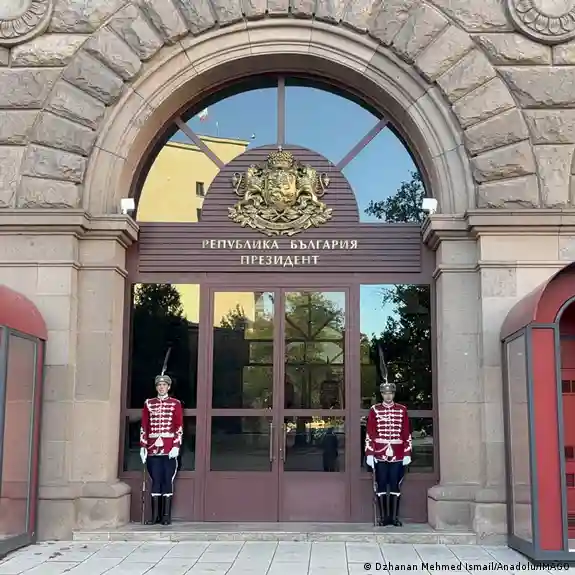
Bulgarians are voting in presidential elections amid security concerns over attacks on ships in the Black Sea. The vote for the largely ceremonial post is seen as a test of the popularity of Prime Minister Rumen Radev.
Bulgarians are going to the polls in a presidential election on Sunday, where they are choosing between candidates who differ on their approach to the war in Ukraine and how close the country should draw to Moscow.
The vote comes as drone attacks on ships in the Black Sea off the Bulgarian coast have brought home the significance of the conflict in Ukraine for the former Soviet satellite state.
Polling stations are open from 7 a.m. to 8 p.m. (0500-1800 GMT), with exit polls to be released when they close.
Official results are expected up to 48 hours after voting ends.
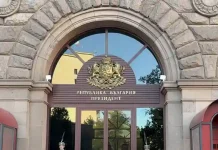
Although the presidency is largely ceremonial, the head of state in Bulgaria can appoint interim governments during political crises, is commander-in-chief of the armed forces and is able to veto legislation.
Who are the main candidates in Bulgaria’s presidential election?
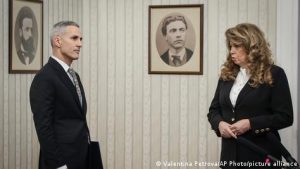
Frontrunner in the elections is incumbent President Iliana Iotova, who took over the position this year after current Prime Minister Rumen Radev stepped down to take part in the parliamentary elections that led him to power.
Iotova, 62, who surveys show as having 41-47% of the vote, favors dialogue with Moscow as the way to bring peace to Ukraine and opposes military aid to Kyiv.
A win for Iotova would give a boost for Radev, who also advocates dialogue with Moscow.
Her main challenger is Andrey Gyurov, a former caretaker prime minister, who is polling at 28-31%.
Gyurov, 50, who is backed by the pro-Western opposition, is an outspoken critic of Radev’s foreign policy and strongly supports the Euro-Atlantic ties of Bulgaria, a European Union and NATO member state.
The leader of the pro-Russian far-right Vazrazhdane party, Kostadin Kostadinov, is in third place on 10-13%.
Altogether 27 pairs of candidates for president and vice president are competing in the first round, with nearly half of them openly pro-Kremlin.
If no candidate wins an absolute majority in the first round, a run-off is scheduled for November 1, with Iotova and Gyurov widely considered as the certain contenders in any second round.
What are the main issues in Bulgaria’s presidential election?
The war in Ukraine triggered by Russia’s unprovoked invasion is one of the central themes in the election, particularly after four merchant ships were allegedly hit by drones off Bulgaria’s coast this month in suspected spillover from the conflict.
Satellite internet antennas from the Starlink network — an important part of Ukraine’s defense capabilities — were also set on fire near the capital, Sofia.
While Radev has said that the attacks seemed to be to the advantage of Russia and summoned the Russian ambassador, his government has declined to blame the incidents directly on Moscow.
The strikes have nonetheless raised concerns over Russia’s intentions to escalate the conflict.
Rising energy prices and inflation that have caused economic hardship to many in Bulgaria, the EU’s poorest member state, are also a main issue addressed by candidates.
Many voters are also looking to stop government corruption, a persistent concern in the country, and hope for a stable government after multiple elections and coalition breakdowns in recent years.
Edited by: Natalie Muller
DW News

