



















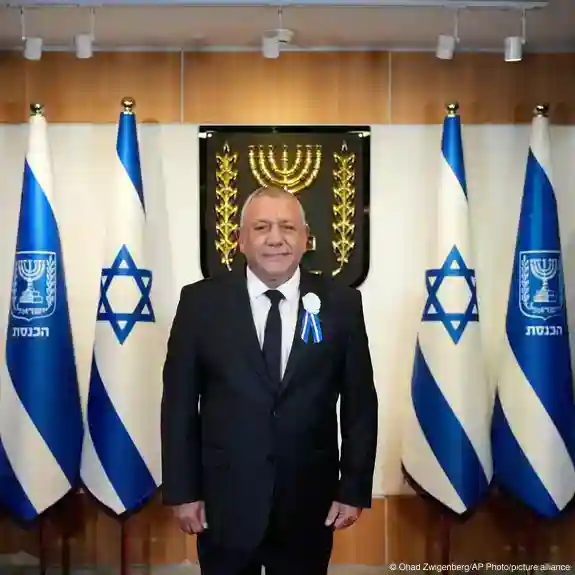
Ex-IDF chief Gadi Eisenkot has yet to forge a coalition that would allow him to replace Benjamin Netanyahu, despite the new Knesset being dominated by the critics of the current prime minister.
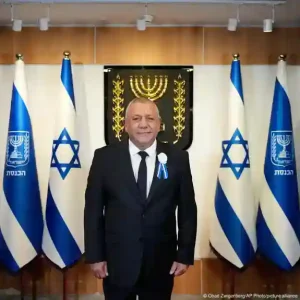
The parliamentary bloc led by Israeli ex-military leader Gadi Eisenkot announced a slew of initiatives on Tuesday targeting the legacy of current Prime Minister Benjamin Netanyahu as the new Israeli Parliament, or Knesset, was sworn in.
Israel held a parliamentary election on October 27.
Eisenkot’s bloc wants government inquiry into October 7 attack
Eisenkot’s centrist Yashar Party and allied parties are seeking an official government inquiry into the Hamas-led terror attacks on October 7, 2023, which killed some 1,200 people in Israel and resulted in another 251 hostages being taken into Gaza.
The attack, which occurred on Netanyahu’s watch, was the single deadliest day for Jewish people since the Holocaust.
Some media outlets had reported that Netanyahu received warnings from Egypt and the UAE ahead of the October 7 assault. The Israeli prime minister denied the claims and said he would sue for defamation over the publications.
In addition to an October 7 probe, the anti-Netanyahu opposition is also seeking to impose term limits on the office of prime minister and aims to reverse the controversial efforts made by the Netanyahu government to reforming the judiciary. Eisenkot’s bloc is also seeking to depose Knesset speaker Amir Ohana, a Netanyahu ally.
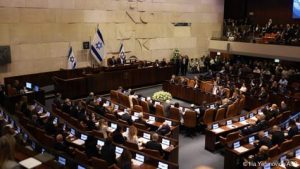
“We will act for all citizens of Israel, those who voted for us and those who did not, out of deep commitment,” Eisenkot said prior to the swearing-in of the new Knesset. He pledged to “form a national-emergency government as quickly as possible.”
Both Netanyahu and Eisenkot bloc short of Knesset majority
Israeli President Isaac Herzog has given Eisenkot a mandate to try to form a government within six weeks.
Eisenkot’s coalition bloc landed 48 seats in the recent election, whereas Netanyahu’s bloc received 53 seats. But neither bloc has enough seats to form a majority in the 120-seat Knesset.
Arab parties garnered a record 19 out of 120 seats in the new Knesset. During the swearing-in ceremony, far-right Israeli politician Itamar Ben-Gvir harassed Arab-Israeli lawmaker Yousef Jabareen in the Knesset chamber
Eisenkot’s bloc could choose to align with the Arab parties to form a government, but Avigdor Lieberman and his right-wing Yisrael Beitenu party oppose the idea. Yisrael Beitenu, which won seven seats in the new Knesset, is a part of the Eisenkot bloc.
Netanyahu urges national unity government to confront Iran
Netanyahu, in a speech to the Knesset, called for a national unity government — a proposal which has been ruled out by Eisenkot. The incumbent head of government lashed out at Arab parties and accused them of backing Israel’s destruction while saying the national unity government is necessary to confront Iran.
“In the very near future, we’re going to be confronted by international pressure to accept a nuclear-armed Iran and the preservation of this terror regime that seeks to annihilate us,” Netanyahu said.
Eisenkot condemned Netanyahu’s remarks, whereas Yair Golan, the leader of the left-wing Democrats party, walked out during Netanyahu’s speech. The Democrats have eight seats and are part of the Eisenkot bloc.
“Netanyahu is struggling to accept that the Israeli public fired him. Now he is lying and inciting against the Arab public in an attempt to cling to power by force,” Golan said on X.
If Eisenkot fails to form a government, Israeli President Herzog could choose another lawmaker, presumably Netanyahu, to cobble together a coalition. The 77-year-old Netanyahu first took power in 1996 and has had three separate stints as the Israeli head of government.
Netanyahu is now the longest-serving prime minister in Israeli history.
Wesley Dockery Journalist and editor focused on global security, politics, business and music.
Edited by: Darko Janjevic
DW News

