















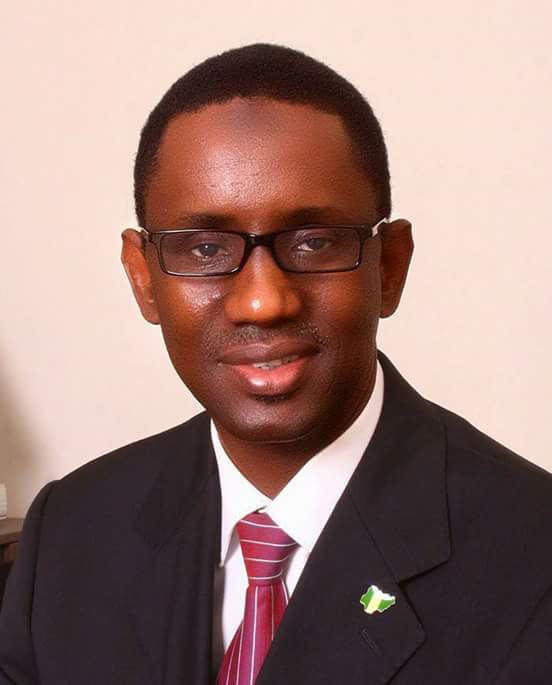
On June 19, 2023, President Asiwaju Bola Ahmed Tinubu appointed Mallam Nuhu Ribadu as Special Adviser on Security. On Monday, June 26, 2023, he formally assumed office as Nigeria’s National Security Adviser (NSA), a position he holds to this day.
National security is a complex, sensitive and enormously important national responsibility. It is not a position given to just anyone, regardless of how close the person may be to the President. The National Security Adviser sits at the centre of the coordination of Nigeria’s security and intelligence architecture. The office requires experience, discretion, strategic thinking, patriotism and, above all, the ability to bring different security institutions together in pursuit of a common national objective.
For over three years, Mallam Nuhu Ribadu has performed these duties diligently and largely without unnecessary noise. In fact, Ribadu appears to “eat like an ant but work like an elephant”. He speaks less about what he does and allows the results to speak for themselves.
He inherited a complicated security environment: terrorism and insurgency in the North-East, banditry and mass kidnappings in the North-West, communal conflicts, oil theft, organised crime, separatist violence and other emerging threats. Nigeria was also confronted by growing instability across the Sahel, making its security challenges increasingly transnational.
Yet, despite these inherited difficulties, the figures and developments emerging from Nigeria’s security operations tell an important story.
Well over 13,000 terrorists, bandits and associated criminals have reportedly been neutralised, with thousands more arrested and large quantities of weapons and ammunition recovered. Among the notable terrorist and bandit commanders taken out of circulation were Kachalla Halilu Sububu, also known as Halilu Buzu; Boderi Isyaku, linked to major kidnappings and the Nigerian Defence Academy attack; Buharin Yadi; “Dangote”; Alti, popularly called the “TikTok bandit”; and several other Kachalla commanders.
The results have not been limited to eliminating foot soldiers. Nigeria’s security forces have increasingly targeted the leadership, financing, logistics and operational networks sustaining terrorist organisations.
In May 2026, a joint Nigeria–United States counterterrorism operation in the Lake Chad Basin neutralised Abu-Bilal al-Minuki, also known as Abu-Mainok, described as a senior ISIS figure, alongside several lieutenants. The 2025 arrests of senior Ansaru leaders, including Mahmud Muhammad Usman, described as the group’s “Emir,” and his deputy, equally represented a major intelligence breakthrough and attracted international commendation.
Thousands of Nigerians have also been rescued from captivity. Reported figures put rescued abductees at over 11,000. High-profile operations have involved schoolchildren and students abducted from three schools in the Oriire area of Oyo State, Kuriga, Federal University Gusau, medical students from the University of Maiduguri and University of Jos, students in Kogi, as well as hundreds of civilians rescued in the throughout the country
Beyond battlefield victories, another development has been the surrender of insurgents and their family members. Cumulative figures frequently cited exceed 100,000, with thousands of weapons reportedly surrendered and eligible individuals passing through deradicalisation, rehabilitation and reintegration programmes.
One important aspect of the Ribadu approach has been collaboration. Modern security threats cannot be defeated by one institution working alone. Intelligence agencies, the Armed Forces, Police, civil defence and other security institutions must exchange intelligence and operate as components of one national security system rather than isolated organisations. This coordinated pressure has produced noticeable improvements across several theatres.
In Zamfara, Katsina, Sokoto, Niger, Kaduna and adjoining areas, security forces have dismantled camps, eliminated commanders and reduced the freedom with which some criminal networks once operated. Improvements have also been recorded along important transport corridors, including the Abuja–Kaduna axis, while previously dangerous routes and communities around areas such as Birnin Gwari have been reopened to economic and social activities.
In the North-East, military operations have continued to recover operational space, disrupt B* Haram and ISW*P supply lines, attack financing and logistics networks and prevent terrorists from operating with the freedom they once enjoyed.
In the South-East, security operations have increased pressure on violent elements associated with IPOB/ESN, weakened the enforcement of illegal sit-at-home orders and facilitated the reopening and rebuilding of police facilities previously attacked or abandoned. The arrest of Simon Ekpa in Finland was another significant development in efforts to disrupt networks accused of encouraging violence from outside Nigeria.
The Niger Delta presents another important chapter. Enhanced maritime surveillance and coordinated operations against oil thieves have significantly reduced large-scale crude theft. From losses that at some points exceeded 100,000 barrels per day, reported theft levels have fallen dramatically during periods of intensified enforcement. Security operations have dismantled illegal refineries, pipelines and criminal networks under sustained operations across the oil-producing region.
The security improvements have contributed to the recovery of Nigeria’s crude oil production from the extremely low levels recorded before the Tinubu administration to approximately 1.7–1.8 million barrels per day during stronger production periods. Protecting Nigeria’s economic lifeline is itself a major national security responsibility.
Nuhu Ribadu’s security strategy has increasingly gone beyond guns, soldiers and checkpoints. Greater use is being made of drones, surveillance technology, data analytics and other intelligence tools for threat identification and operational planning. Digital forensic capabilities are being strengthened, while initiatives such as the Mines Marshal Corps are helping protect mining locations and disrupt the nexus between illegal mining, resource trafficking and insecurity.
The training and deployment of forest guards represents another important frontier.
Nigeria’s security challenges also have strong cross-border dimensions. Terrorists, arms traffickers, kidnappers and organised criminal groups do not respect national boundaries. Developments across the Sahel directly affect Nigeria. This reality requires diplomacy and international security cooperation alongside military operations at home. Here again, Ribadu’s stewardship has produced visible gains. Nigeria and the United States have substantially deepened cooperation in counterterrorism, intelligence sharing, military training, border security and defence capacity building.
In May 2026, Ribadu held high-level engagements in Washington with U.S. Vice President J.D. Vance, Secretary of State Marco Rubio and other senior officials. Equally on August 12-13, 2026, he led a high-level delegation to Washington, D.C.,for the second session of the U.S.–Nigeria Joint Working Group (JWG). The growing security partnership and joint operations demonstrate not only Nigeria’s strategic importance but also international confidence in its current security leadership.
Ribadu’s job therefore extends far beyond sitting in Abuja and receiving security reports. It involves connecting intelligence, military strategy, technology, diplomacy, international partnerships and political leadership into a coordinated response to constantly evolving threats.
Perhaps one of his greatest strengths is that he does not appear interested in turning national security into a personal publicity project. Security is ultimately measured by outcomes, not press conferences. Intelligence work is often most successful when the public never knows what was prevented.
There is still some work ahead. Nigerians continue to demand more safer highways, farms and communities and an end to terrorism, kidnapping, banditry and other violent crimes. Though there is no country in the world with 100% perfect security, but these expectations are legitimate. And, acknowledging these tremendous achievements and progress is essential
From thousands of terrorists and bandits neutralised and commanders eliminated to thousands of captives rescued; from mass insurgent surrenders to pressure on terrorist financing; from safer strategic corridors to reduced oil theft; from technology-driven intelligence to forest security; and from improved inter-agency coordination to stronger international partnerships, the gains are increasingly measurable.
Over three years after Ribadu entered the Office of the National Security Adviser, his approach has demonstrated something important: national security requires patience, intelligence, coordination, technology, international cooperation and relentless pressure on criminal networks.
Sometimes, the man making the least noise is doing some of the heaviest lifting. That, perhaps, is the story of NSA Nuhu Ribadu .
Zayyad I. Muhammad weites from Abuja, 08036070980

