





















The Federal Government has said it is developing a policy on small-scale hydro projects to convert some 21 idle dams discovered along the Sokoto-Badagry Road into commercially viable projects.
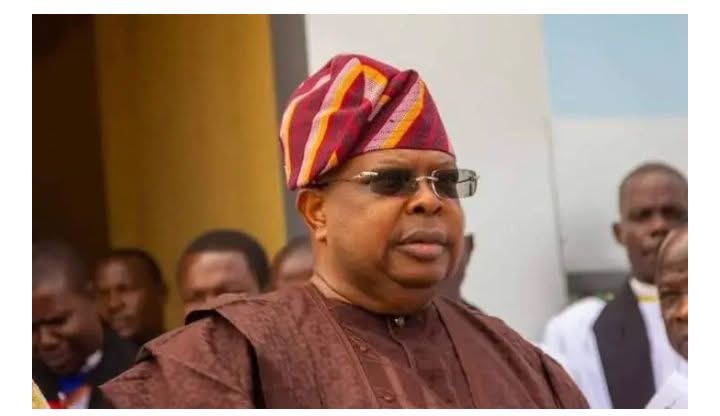
The Minister of Power, Joseph Tegbe, disclosed this in Abuja on Wednesday at the launch of the Renewable Energy Asset Management Company. Tegbe said the discovery of the dams during the ongoing road construction raised questions about why such infrastructure had remained abandoned for many years.
“And again, in the course of the construction of the Sokoto-Badagry Road, 21 dams were discovered. How can we have 21 dams lying fallow?” he asked.
Explaining the government’s plan for the facilities, the minister said he had the mandate of President Bola Tinubu to put the dams into use.
“That’s why in the power sector, we’re also coming up with a policy on small-scale hydro projects. So that the 21 dams discovered along the Sokoto-Badagry Expressway shall be converted into commercially viable projects,” he stated.
Tegbe said the plan formed part of the Federal Government’s broader efforts to optimise public assets and ensure that infrastructure already available was put to productive use.
Tegbe said the government was looking at areas where power assets had become stranded or idle and planned to connect them to locations where the electricity was needed.
“We’re looking at assets in some corridors where we have stranded power and idle power, and we want to channel them to the corridors that need them – in Lagos, in Kano, and in Borno areas,” he said.
The minister said the government was also working on grid stabilisation, identifying three major energy zones and corridors comprising the Lagos axis, Abuja-Kaduna-Kano and Enugu-Port Harcourt.
“We’ve identified three major energy zones and corridors: the Lagos axis, Epe, which is all across the main Lagos into the Sagamu axis; Abuja–Kaduna–Kano; and then Enugu–Port Harcourt,” Tegbe said.
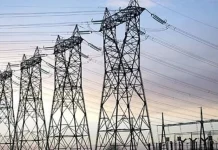
He said technical audits were being conducted to determine the condition of infrastructure along the corridors and guide the replacement of faulty equipment.
“We’re currently conducting technical audits to identify infrastructure that we have there. How many of our insulators are broken? How many of our conductor relays are falling? How many of our towers are down? And in the next few weeks, once we finish, we’ll start to replace some of the equipment and infrastructure that’s been there for 42 years,” he said.
Tegbe noted that the government would not sell its assets but would seek to put them to productive use and leverage them to attract funding.
“And when we do that, we will not sell government assets, but we will put them into good use by putting them on a good balance sheet that we can use to leverage funding when we require it,” he said.
He said the new renewable asset management model was designed to change the way public assets were managed, moving away from a system focused mainly on acquiring and commissioning infrastructure.
He regretted that Nigeria had a large stock of power infrastructure but had struggled to ensure reliable electricity supply. “Nigeria has lived too long with an embarrassing paradox. We’re very rich in power assets, energy resources, and installed infrastructure, yet we’re poor in the ability to depend on electricity,” he said.
Tegbe said the government’s ambition was to ensure that electricity infrastructure supported economic growth and industrial development. He promised an end to grid collapse, saying Nigerians would soon enjoy a stable power supply.
“Our ambition is much bigger than just ending that race. Our ambition is to use electricity to build prosperity, to make Nigeria competitive for manufacturing, and to power the next generation of digital infrastructure,” he said.
He added that the government was targeting increased wheeling capacity, from about 5,000MW currently to 6,500MW by the end of 2026 and 8,000MW by the end of 2027.
Arise news

