





















Venezuela’s National Assembly has approved an amnesty bill in its first vote that could lead to the mass release of political prisoners. The bill marks a milestone in the post-Maduro transition.
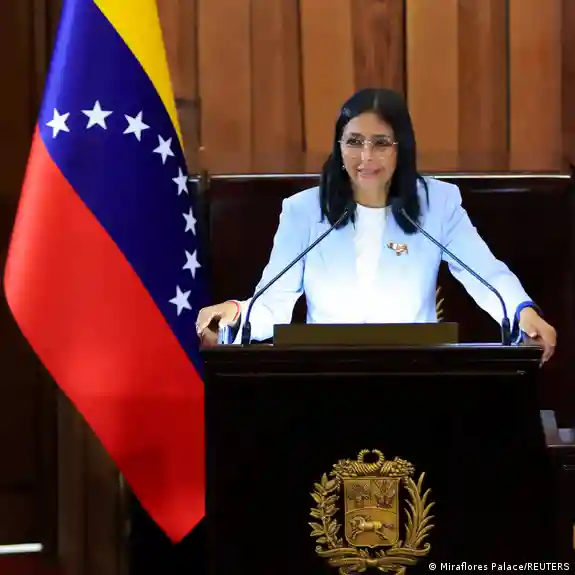
“A very important event has occurred for Venezuela: the unanimous adoption by all the political forces present in the Assembly, in its first reading, of the amnesty law, which is a law for peace and national reconciliation,” Rodriguez, who succeeded deposed leader Nicolas Maduro, said.
Venezuela’s amnesty bill could lead to the release of hundreds of opposition leaders, journalists and human rights activists who have been detained for political reasons.
Breaking years of repression in Venezuela
In announcing the bill late last month, Rodríguez said in a pre-taped televised event: “May this law serve to heal the wounds left by the political confrontation fueled by violence and extremism.”
“May it serve to redirect justice in our country, and may it serve to redirect coexistence among Venezuelans,” she added.
The bill, introduced just weeks after the US captured Maduro, still requires a second and final vote in the National Assembly before it can be adopted. Lawmakers are set to meet on Tuesday for a final reading.
Jorge Rodriguez, the assembly’s head and the interim president’s brother, said the law is a difficult but necessary step.
“The path of this law is going to be full of obstacles, full of bitter moments,” he said. “We ask for forgiveness, and we also have to forgive.”
Venezuela’s amnesty to cover broad timeline
If approved, the amnesty would cover cases dating back to 1999, when the late Hugo Chavez took office, through to the present day.
According to the draft, the amnesty would lift bans on several opposition members, including Nobel Peace laureate Maria Corina Machado, from running for office.
The bill would exclude people convicted of war crimes, murder, corruption or drug trafficking and serious human rights violations.
Edited by: Sean Sinico
DW News

