




















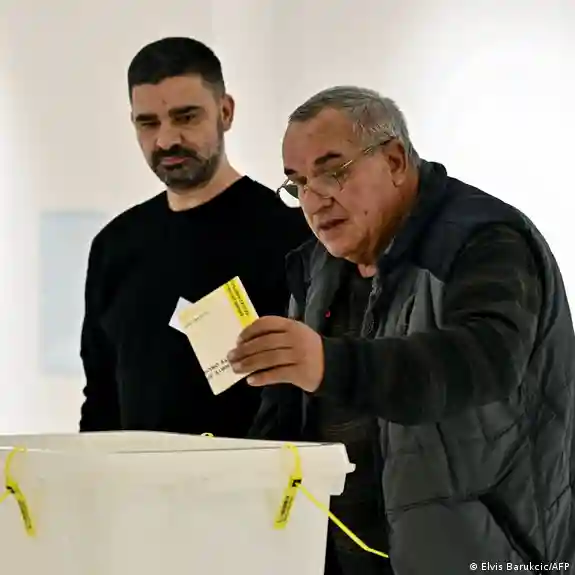
The snap vote pits Sinisa Karan against Branko Blanusa after long-term President Milorad Dodik’s removal from office in the Bosnian Serb entity.
Bosnia and Herzegovina’s Serb-majority Republika Srpska is voting on Sunday to elect a new president
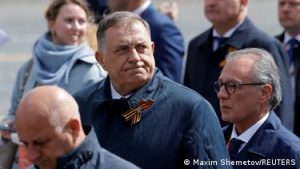
The snap election follows the removal of former Bosnian Serb leader Milorad Dodik, a staunch pro-Russian politician who has dominated the political landscape for years.
What led to Sunday’s vote
Earlier this year, Dodik was sentenced to a year’s imprisonment and barred from political activity over separatist policies that international overseers said stoked instability in the Balkan nation.
Dodik flouted decisions by High Representative Christian Schmidt, the international envoy tasked with enforcing the Dayton Agreement peace deal that ended the Bosnian War 30 years ago.
Dodik had repeatedly threatened the possible secession of Republika Srpska, from the rest of the Bosnia.
His threats reignited fears in a nation where the 1992-95 war killed around 100,000 people and displaced millions.
Although Dodik initially came to power in 1998 with Western support, he later began expressing more openly Serbian nationalist positions and has in recent years attempted to pivot toward Moscow.

What is the Republika Srpska?
The 1995 Dayton Agreement that ended the war saw the Balkan country divided into a Serb-majority entity, known as Republika Srpska, as well as the Federation of Bosnia and Herzegovina, which was to represent the Bosniak — also known as Bosnian Muslim — and Croat communities.
The mixed Brcko District was established as a buffer between the two entities.
Since the end of the war, Bosnia has remained plagued by nationalistic politics, as well as corruption and substantial economic woes.
Who is in contention in the Sunday vote?
The vote sees Sinisa Karan — the Alliance of Independent Social Democrats (SNSD) candidate who previously served as former minister of internal affairs and considered Dodik’s right-hand man — go up against Branko Blanusa, a university professor and candidate of the opposition Serb Democratic Party.
Four other contenders are in the race but are not considered to be strong candidates.
Blanusa said upon casting his ballot in the northwestern town of Banja Luka that “the election campaign passed in a fair and tolerant atmosphere.”
“I hope the election day will be the same,” Blanusa added, while urging voters to come out in numbers among the 1.2 million eligible voters.
According to polls heading into Sunday, Karan and Blanusa were neck-and-neck with a tight margin expected when the winner is announced. The preliminary results are expected after polling stations close at 18:00 GMT.
Edited by: Saim Dušan Inayatullah
DW News

