
















Tijjani Galadima and the Next Adamawa Project
By Kwaji Zira
As the political landscape in Adamawa State gradually takes shape ahead of the 2027 gubernatorial election, a defining question continues to resonate across communities, stakeholder circles, and grassroots platforms: who possesses the clarity, balance, and forward-looking vision required to sustain progress while advancing the state into its next phase of development?
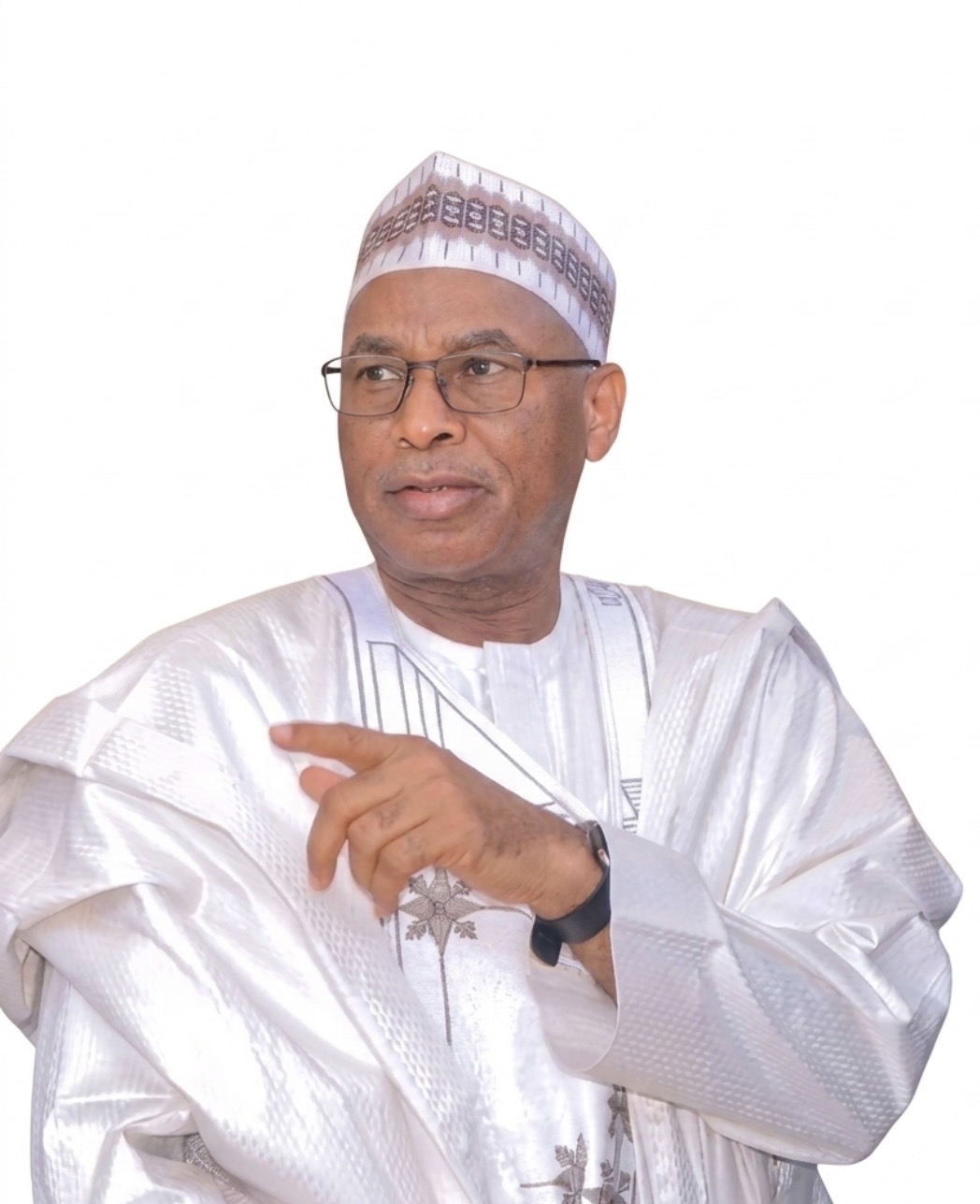
Amid a crowded field of aspirants, Tijjani Ahmed Galadima Aminu is steadily distinguishing himself, not through noise or manufactured momentum, but through a methodical, people-oriented approach that reflects both maturity and purpose. His emergence is not accidental. It is the result of deliberate engagement, disciplined strategy, and a growing alignment with the expectations of a state that seeks stability, continuity, and meaningful advancement.
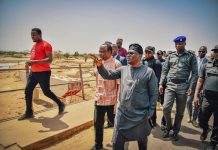
At a time when the language of “imposition” is casually deployed in political discourse, Galadima’s approach offers a quiet but firm rebuttal. Rather than relying on projections or elite-driven narratives, he has chosen to engage directly with the people, moving across communities, interacting with stakeholders, and deepening consultations that are rooted in listening rather than proclamation. This process is not symbolic. It is a conscious effort to understand the pulse of Adamawa from the ground up and to build legitimacy through inclusion and consensus.
His engagement with traditional institutions has further reinforced this approach. By meeting with emirs, chiefs, and community leaders across the state, he is not merely seeking endorsement; he is cultivating trust and partnership. These institutions remain central to the social and cultural stability of Adamawa, and meaningful engagement with them signals respect for established structures of leadership and community cohesion. It also reflects an understanding that governance must be anchored in both formal authority and moral legitimacy.
The growing resonance of his consultations points to something deeper than a routine political exercise. It reflects an emerging movement shaped by shared aspirations and a collective desire for leadership that is both accessible and accountable. In a state as diverse as Adamawa, this kind of broad-based engagement is not just strategic; it is necessary.
Central to Galadima’s appeal is his clear position on how leadership should be attained. His philosophy is simple but significant: power must be earned through credible processes, not handed down through convenience. This stance aligns with the broader expectations within the political space, where legitimacy is increasingly tied to transparency, adherence to party procedures, and respect for democratic norms. It also mirrors the position that aspirants must present themselves before the people and secure their mandate through acceptable channels.
Beyond process, the substance of leadership remains the critical factor. Adamawa has, in recent years, experienced notable progress in infrastructure, governance, and social development. The challenge ahead is not merely to preserve these gains, but to deepen and expand them in a way that touches more lives and strengthens institutional capacity. This is where Galadima’s outlook becomes particularly relevant.
His vision is anchored on sustaining the trajectory of development while introducing refinements that enhance efficiency, inclusion, and long-term impact. He recognizes that governance is a continuum. Disrupting ongoing progress through abrupt shifts or policy reversals would undermine both resources and public confidence. Instead, his approach suggests a steady consolidation of achievements, combined with targeted innovations that respond to evolving needs.
This balance between continuity and advancement is critical. It speaks to a leadership style that is not driven by the desire to reinvent for its own sake, but by a commitment to build upon existing foundations and deliver measurable improvements. It also reflects an appreciation of the complexities of governance in a state where economic, social, and cultural dynamics require careful alignment.
Another defining feature of Galadima’s candidacy is his disposition. In a political environment that has often been characterized by tension and heightened contestation, his calm and measured approach offers a stabilizing contrast. He is widely perceived as disciplined, focused, and relatively free from the controversies that tend to complicate public trust. This is not merely a matter of personality; it is a strategic advantage in a context where unity and cohesion are essential for progress.
Adamawa’s diversity demands leadership that can bridge divides and foster a sense of shared purpose. Galadima’s inclusive outlook positions him as a unifying figure, one capable of engaging across different interests without deepening fault lines. His approach prioritizes collective progress over sectional advantage, a quality that is increasingly valued in a state seeking to strengthen its social and political fabric.
His background also reflects a blend of grassroots connection and broader exposure. From his early involvement in student engagement, where ideas and ideology shaped participation, to his evolution into a more experienced public figure, he has maintained a consistent orientation toward people-centered leadership. This foundation enables him to connect with local realities while also appreciating the demands of a changing governance environment.
Importantly, his journey into the gubernatorial race reflects a willingness to subject himself to the full weight of the democratic process. Rather than seeking an easy pathway, he has embraced the rigors of consultation, negotiation, and consensus-building. This readiness to engage within established frameworks underscores both political maturity and respect for institutional processes.
Across the state, signs of growing support are becoming increasingly evident. From community-level interactions to stakeholder engagements, there is a noticeable shift in how his candidacy is being perceived. It is no longer viewed as just another entry into the race, but as a developing platform that resonates with the aspirations of many. This momentum is not driven by spectacle, but by steady, deliberate outreach and a message that emphasizes responsibility and results.
At its core, what is unfolding around Tijjani Ahmed Galadima Aminu can be understood as the crystallization of a broader idea, an idea that Adamawa’s next phase of development must be anchored on stability, inclusiveness, and sustained progress. This is what gives meaning to the concept of the Next Adamawa Project. It is not about an individual alone, but about a direction, a framework, and a shared commitment to move the state forward without losing the gains already achieved.
As the 2027 election draws closer, the decision before the people of Adamawa will extend beyond personalities and political alignments. It will be a choice about continuity versus disruption, about consolidation versus uncertainty, and about the kind of leadership that can effectively navigate the complexities of governance in the years ahead.
Within this context, Tijjani Galadima’s candidacy presents a compelling proposition. It combines process with purpose, consultation with clarity, and ambition with restraint. It reflects an understanding that leadership is not merely about occupying office, but about guiding a state through a critical phase with responsibility and foresight.
The path to 2027 remains competitive and dynamic, as expected in any vibrant political environment. Yet, as conversations deepen and alignments take shape, one reality is becoming increasingly difficult to overlook: the search for leadership that can sustain and consolidate Adamawa’s development is gradually converging around a figure whose approach reflects both the demands of the present and the possibilities of the future.
In that unfolding equation, Tijjani Ahmed Galadima Aminu is not just participating in the race. He is steadily defining its direction.
Kwaji Zira writes from Michika, Adamawa state

