
















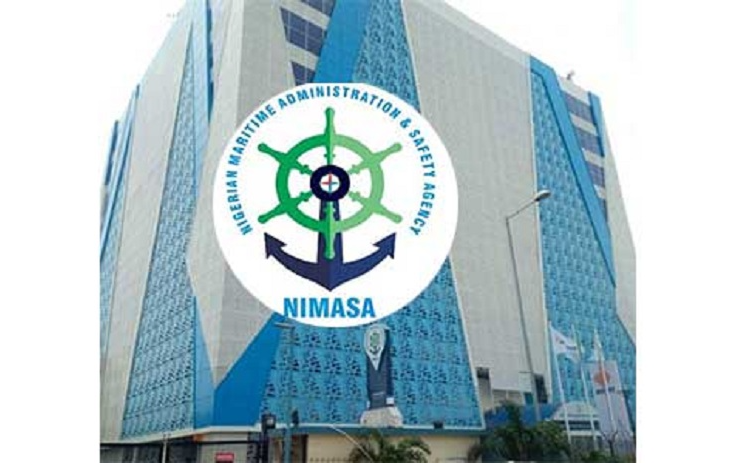
The Nigerian Maritime Administration and Safety Agency (NIMASA) has reaffirmed its commitment to transforming the nation’s maritime domain and the West African sub-region into a global benchmark for gender-inclusive digital excellence.
The director general of NIMASA, Dr Dayo Mobereola, made the pledge on Tuesday during the opening of a three-day symposium titled “Digitalisation and the Empowerment of Women in the Maritime Sector of West Africa: Opportunities, Challenges and Pathways.”
The event, hosted by NIMASA in Lagos, was organised by the Kofi Annan International Peacekeeping Training Centre (KAIPTC), Ghana, in collaboration with the Ministry of Foreign Affairs of Denmark and the Inter-Regional Coordination Centre (ICC).
Represented by the director of Finance and Administration, Chudi Offordile, Mobereola emphasised that the maritime industry is undergoing a profound transformation driven by automation, smart logistics, and data systems.
He noted that while digitalisation creates new opportunities for efficiency and growth, it also exposes persistent gaps in women’s participation in the maritime sector, making their empowerment a critical priority for the industry.
“Across the world, digitalisation is reshaping how ships operate, how ports function, how cargo is tracked, and how maritime administrations regulate and deliver services. While Digitalisation creates new opportunities, it also exposes persistent gaps, particularly in women’s participation in the maritime sector, which is why the empowerment of women in this area is critical.
“Across West Africa, women remain significantly underrepresented in many
areas of maritime operations. These disparities are not merely statistics; they
represent untapped talent, unrealised potential, and lost opportunities for
inclusive growth, which we must find ways to close out., ”
The NIMSAS DG described digitalisation as the ultimate disruptor of traditional barriers that have historically limited female participation.
“Digitalisation acts as the ‘great equaliser,’ shifting the industry’s centre of gravity from physical strength to intellectual agility and technical precision. It dismantles traditional barriers through AI-driven simulations and e-learning, thereby enhancing the knowledge economy and promoting skill acquisition, creating new pathways for career advancement. Today, a young woman in a rural West African town can access the same training modules as anyone in the more advanced world.
“The transformation we seek is not an endpoint, but a continuous voyage. Digitalisation is the wind in our sails, but inclusive policy is the rudder that guides us.” he said.
Describing the Blue Economy as a frontier of limitless potential, Mobereola said the agency is not merely seeking representation for women as a matter of social justice but pursuing sectoral transformation as a matter of economic survival.
He said the symposium resonated with the 2026 International Women’s Day theme, “Give to Gain,” urging stakeholders to move beyond rhetoric toward actionable strategies that will enable women of West Africa to lead the next maritime frontier.
In his remarks, the Deputy Commandant of the KAIPTC, Brigadier General Zibrim Bawah Ayorrogo, highlighted the significant role women play in shaping the future of maritime security and governance, especially as digital technologies redefine operational landscapes.
He noted that digital transformation offers a unique chance to enhance maritime domain awareness and coordination.
“The Gulf of Guinea is a maritime domain of immense strategic importance, rich in resources, and a hub for international trade. However, it also faces complex security challenges, including piracy, illegal fishing, and trafficking.
“Digital transformation presents a unique opportunity to enhance maritime domain awareness, improve coordination, and strengthen response capabilities. It is imperative that women are not only included but also empowered to lead and innovate within this evolving digital ecosystem, ensuring that technology serves as a tool for inclusive growth and security.
“Women’s participation in maritime affairs has historically been limited by socio-cultural and institutional barriers.
Yet, their involvement brings diverse perspectives and solutions vital for holistic maritime governance.
“Digital transformation can act as a catalyst to break these barriers by providing platforms for education, networking, and leadership development. It is encouraging to witness increasing numbers of women engaging in digital skills acquisition, policy formulation, and operational roles within maritime security institutions across the Gulf of Guinea, “he said.
He said since 2021, the KAIPTC has dedicated a specialised department to women and youth issues in the peace and security domain, recognising that diverse perspectives are vital for holistic maritime governance.
He, however, noted that despite the progress made, challenges such as access to technology and digital infrastructure, as well as gender gaps, still persist in STEM (Science, Technology, Engineering, and Mathematics) education and professional training.
He added that digital threats such as cyber-attacks and misinformation campaigns also pose new risks that require specialised knowledge and vigilance.
To address these challenges, he called for concerted efforts from governments, industry, academia, and civil society to create enabling environments where women can thrive as digital leaders and innovators in maritime security.
He expressed KAIPTC’s commitment to supporting the transformation through research and capacity-building initiatives that integrate gender perspectives and digital competencies.
“Our training programs increasingly emphasise the intersection of technology, security, and gender inclusion, equipping women with the skills necessary to navigate and influence the digital maritime domain. Collaboration with regional and international partners is central to expanding these opportunities and fostering networks that amplify women’s voices and contributions.
Governments in the Gulf of Guinea must prioritise regulatory reforms that facilitate women’s access to digital tools, protect against cyber vulnerabilities, and encourage their participation in decision-making processes. Such policies will not only enhance maritime security but also contribute to broader socio-economic development and peacebuilding efforts in the region.
“Private sector engagement is equally crucial. Technology companies, maritime operators, and financial institutions have a responsibility to invest in women-led digital innovations and entrepreneurship.
“Public-private partnerships can accelerate the deployment of cutting-edge technologies while ensuring they are accessible and relevant to women’s needs and aspirations within the maritime sector,” he said.
Leadership

