




















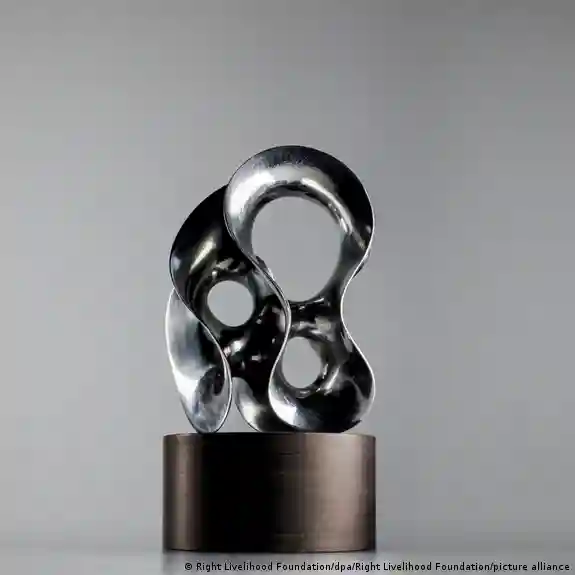
The Right Livelihood Award has gone to a female AI researcher and women fighting repression. The Sweden-based prize has been dubbed an “alternative Nobel.”

A leading AI researcher, together with a woman lawyer from Pakistan and two women-led rights groups, on Wednesday received a Sweden-based rights award that honors work seen as contributing to a more just and peaceful world.
The Right Livelihood Award was created by Swedish-German philanthropist Jakob von Uexkull in 1980 to celebrate achievements in the fields of environment and international development disregarded by the Nobel Prizes.
It is usually awarded a week before the Nobel Prizes.
Right Livelihood said this year’s winners, selected from 200 nominations from 72 countries, were being honored for “resistance to systems that push people to the margins, and a shared insistence on putting people back at the center.”
Who won the Right Livelihood Award in 2026?
An AI researcher fighting bias
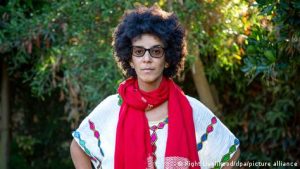
AI researcher Timnit Gebru, the founder of the Distributed AI Research Institute, received her prize for her work in examining how artificial intelligence is influenced by biases.
In a statement, Right Livelihood said she was being honored “for challenging concentrated power in artificial intelligence and pioneering digital technology rooted in justice, lived experience and human agency.”
In 2020, Gebru, who was born in Ethiopia to a family of Eritrean origin, was one of the authors behind a paper on the risks of biases in so-called large language models (LLMs) while co-leading tech giant Google’s Ethical AI team.
According to the jury, Google dismissed her after she refused to retract the paper or remove her name as requested unless certain guarantees were given.
A Pakistani lawyer fighting repression
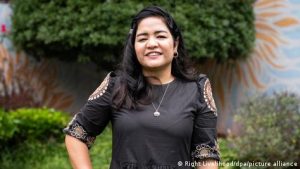
Another winner was Jalila Haider of Pakistan, who the jury said was awarded the prize “for breaking barriers, as the first female lawyer from her Hazara community, to challenge ethnic, state and patriarchal persecution, guided by the conviction that no human being is illegal.”
Haider is known for her work defending some of her country’s most vulnerable communities against repression by the state, discrimination against women and ethnic violence.
“Haider has secured justice for thousands targeted or ignored by those in power, specifically ethnic, gender and religious minorities, as well as refugees,” the organization said.
A Southern African rural women’s group defending land rights
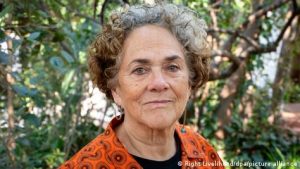
The Rural Women’s Assembly, which brings together more than 178,000 small-scale farmers in 11 Southern African countries, was another winner of the prize.
The Right Livelihood jury said the group had created “a united force defending land, seed and bodily autonomy against corporate and patriarchal dispossession.”
Among other things, the Assembly has worked to reproduce and preserve local seed varieties to help protect a long traditional practice of saving and exchanging such seeds, the foundation said.
A Georgian human rights group protecting civic power
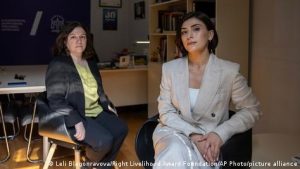
The prize also went to the Georgian Young Lawyers’ Association (GYLA), which the foundation said it was honoring “as the moral compass of Georgian society.”
The jury said the group, founded in 1994, received the award for its efforts in “building and safeguarding Georgian democracy and sustaining civic power in the face of an autocratic crackdown.”
Edited by: Elizabeth Schumacher
DW News

