















Aliko Dangote announces plans to invest in a 20,000MW power project aimed at tackling Nigeria’s electricity crisis, as part of broader efforts to drive industrial growth and reduce reliance on generators.
Aliko Dangote plans to invest in power generation with a target of 20,000 megawatts.
The move is aimed at addressing Nigeria’s long-standing electricity shortages affecting homes and businesses.
The power project is part of Dangote Group’s broader investments in refinery, fertiliser, LNG, and infrastructure.
Dangote says African investors must take the lead in solving the continent’s development challenges.
Africa’s richest businessman, Aliko Dangote, is setting his sights on one of Nigeria’s biggest long-standing problems, power.
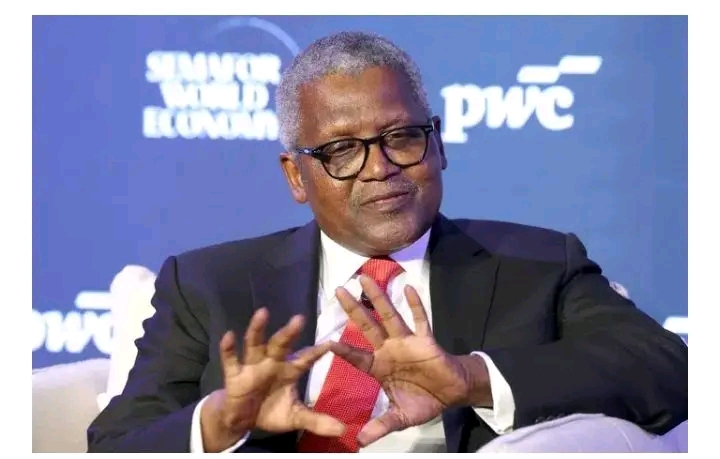
Speaking during a conversation at the International Finance Corporation (IFC) with Managing Director Makhtar Diop, Dangote revealed plans to invest in power generation on a massive scale, targeting up to 20,000 megawatts. If achieved, that would be a major leap for Nigeria, where power supply has struggled for decades to meet demand.
International Finance Corporation (IFC) Managing Director, Makhtar Diop
Dangote eyes power as next big move
Aliko Dangote says that his group is ready to tackle Nigeria’s power deficit with a massive 20,000MW generation plan.
Dangote didn’t present it as just another business expansion. For him, it’s tied to a bigger idea, fixing Africa’s structural problems by investing directly in them.
“We are now going into power 20,000 megawatts,” he said, listing it alongside other major projects like fertiliser production, LNG, and port development.
Nigeria currently generates far less than its estimated electricity needs, with many businesses and households relying heavily on diesel and petrol generators. A project of this scale could significantly reduce that dependence, if delivered.
From refinery success to bigger ambitions
After proving skeptics wrong with his refinery, Dangote is now leveraging that confidence to address Africa’s energy and infrastructure gaps.
This isn’t Dangote’s first attempt at tackling a major gap in Nigeria’s economy.
His $20 billion refinery project, now one of the largest in the world, was once widely doubted. Even he admitted the idea sounded unrealistic at the start.
“At the time when I started this refinery… I have never ever seen crude oil in my life,” he said. “People openly said this refinery will never happen.”
Today, the refinery is operating at around 650,000 barrels per day, helping reduce Nigeria’s reliance on imported fuel.
That success, he says, has changed his confidence level.
“We must invest in Africa ourselves”
Dangote’s broader message was clear, Africa cannot keep waiting for foreign investors to solve its problems.
“How do we open up Africa? We will open Africa by demonstrating that we believe in Africa, by investing our money in Africa,” he said.
He argued that without local investment and commitment, it’s difficult to convince outsiders to take the continent seriously.
“If I don’t invest my own money, I can never go to any conference and convince people that Africa is a good place to come and invest.”
Bigger plans beyond power
The power project is just one part of a wider expansion strategy.
Dangote disclosed that his group is scaling up fertiliser production to about 12 million tonnes annually, which could make it the largest in the world.
There are also plans involving mining (potash and phosphate), agriculture, LNG, and the construction of a deep-sea port.
All of this, he says, is aimed at solving “critical needs of Africa” — not just building profitable businesses.
“Our own mission… is to look at critical needs of Africa and make sure that yes, we make those critical areas a reality,” he explained.
Power, infrastructure, and Africa’s growth challenge
If realized, Dangote’s power project could triple Nigeria’s current available electricity generation, transforming the industrial landscape.
Nigeria’s power deficit has long been seen as a major barrier to economic growth. Industries struggle with high energy costs, and small businesses often depend on generators, which increases operating expenses.
Dangote’s proposed 20,000MW capacity, if realised, would be several times higher than Nigeria’s current average available generation, a sign of how ambitious the plan is.
A push for African-led development
Dangote also spoke about the need for stronger regional integration across Africa, pointing out challenges like visa restrictions, expensive flights, and trade bottlenecks.
“I need 38 visas to move around… how do I now invest if I’m not able to move around?” he said.
For him, solving infrastructure issues, power, transport, energy, and agriculture, is key to unlocking Africa’s economic potential.
Dangote’s message wasn’t just about power plants or profits. It was about shifting how Africa grows, from dependence to self-driven development.
Whether the 20,000MW power ambition becomes reality is another question entirely. But if his refinery project is anything to go by, it’s clear he’s willing to take on projects many consider too big to attempt.
Arise News

