













As political activities gradually gather momentum ahead of the 2027 general elections, familiar scenes are beginning to play out across Nigeria. Politicians are reaching out to influential religious leaders, traditional rulers, community associations and professional groups in search of goodwill, legitimacy and, ultimately, votes.
Lagos State is no exception.
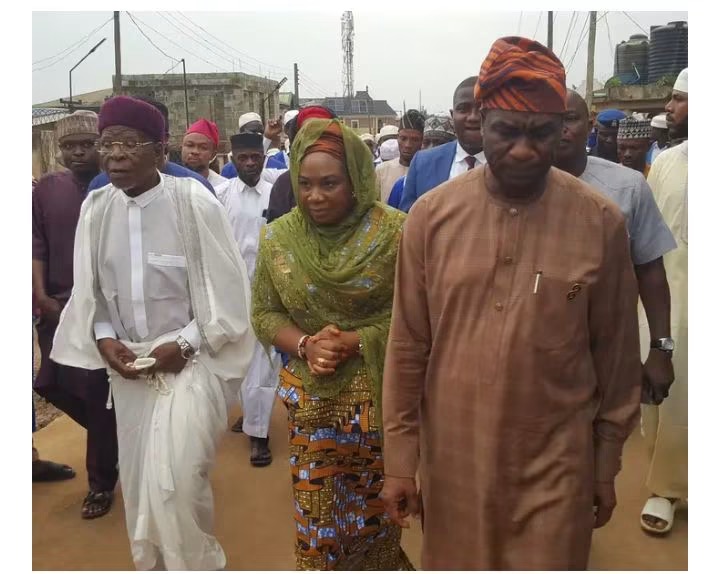
In recent days, the Deputy Governor of Lagos State and the All Progressives Congress (APC) governorship candidate, Dr Obafemi Kadri Hamzat, has visited two respected Islamic scholars, Sheikh Jibreel Ramadan of Markaz Salaam and Sheikh Habeebullah Adam Al Ilory of Markaz Arabic and Islamic Training Centre, Agege. Whether these visits are directly connected to the forthcoming governorship election or are simply part of his longstanding relationship with the Muslim community is not the most important issue. What deserves greater attention is how the Muslim community responds.
There is absolutely nothing wrong with politicians visiting Muslim scholars, Islamic organisations or religious institutions before or during elections. Such engagements are part of democracy. Religious leaders represent millions of followers whose concerns deserve to be heard by those seeking public office.
Likewise, there is nothing wrong with Muslim organisations and scholars receiving politicians. Dialogue between political leaders and faith communities is healthy in every democracy. Hosting a politician should never be interpreted as endorsing that candidate or political party.
It is also important to acknowledge that Dr Hamzat’s relationship with the Muslim community did not begin because of the election season. Long before emerging as the APC governorship candidate, he regularly attended Islamic programmes across Lagos and, on many occasions, represented Governor Babajide Sanwo Olu, who is a Christian. Therefore, every visit should not automatically be viewed through the prism of politics.
The same principle should apply to candidates from other political parties. Muslim organisations should be willing to receive every serious governorship or presidential candidate, irrespective of political affiliation. Since every political party has Muslim members and supporters, engaging candidates from different parties is both legitimate and necessary.
However, if Muslim organisations are going to host politicians, those meetings should produce something more meaningful than photographs, handshakes and ceremonial exchanges. They should become opportunities to negotiate for the collective interests of the Muslim community.
This is where Muslims, particularly in Lagos State and across Nigeria, need a new strategy.
Rather than individual organisations making separate requests for personal benefits, appointments or favours, Muslim leaders should set aside their differences and present a common agenda that reflects the aspirations of the entire Ummah.
Unfortunately, one of the greatest challenges confronting Muslims today is self interest. Too often, once a particular organisation or influential individual secures government patronage, appointments or support, the broader concerns of the Muslim community are forgotten. Instead of pursuing collective advancement, attention shifts to protecting narrow organisational interests.
That approach has not served the Ummah well.
If Muslims expect governments to accord them the respect they deserve, they must first demonstrate unity, discipline and strategic thinking.
Lagos offers a clear example of why Muslims must become more organised politically. Despite the overwhelming support many Muslims gave the APC in the 2023 governorship election that returned Gov. Sanwo-Olu for a second term, Muslims were marginalised in key public appointments, particularly in the appointment of commissioners and permanent secretaries. The imbalance reinforces the need for structured engagement with political leaders before elections rather than after governments have been constituted.
The conversation should therefore begin before electioneering campaigns commence, when candidates and political parties are seeking the trust and support of the electorate, not after elections have been won and major appointments have already been concluded. That is when communities possess greater leverage to negotiate commitments that can be measured after elections.
The Nigerian Supreme Council for Islamic Affairs (NSCIA) under the leadership of the Sultan of Sokoto, Alhaji Muhammad Sa’ad Abubakar III, together with the Muslim Ummah of South West Nigeria, MUSWEN, and other major Muslim organisations across the federation, should convene a broad consultative forum involving respected scholars, professionals, women groups, youth organisations, business leaders, academics and community leaders.
The purpose of such a gathering should not be to endorse any political party or candidate. Rather, it should be to develop a common charter of demands that can be presented to every serious presidential, governorship and legislative candidate. Every candidate should be given the opportunity to explain how they intend to address the legitimate concerns of the Muslim community and the wider Nigerian society.
One of the greatest obstacles to achieving this objective is the absence of a united voice. Political actors often exploit divisions within the Muslim community by engaging organisations separately, making isolated promises or offering appointments to a few individuals while the broader interests of the Ummah remain unattended. As long as Muslims continue to negotiate as fragmented groups, their collective influence will remain weaker than it ought to be.
The agenda of the Muslim community should extend beyond appointments. It should include equitable representation in public institutions, protection of constitutional rights, freedom of religion, quality education, economic empowerment, youth development, healthcare, security, ethical leadership, merit based appointments and equal opportunities in public service. These are issues that affect Muslims directly while also advancing the welfare of all Nigerians.
The conversation should also emphasise competence. Nigeria has no shortage of qualified Muslim professionals capable of delivering exceptional results when given the opportunity.
Arise News

