











Following a meeting with the head of the International Olympic Committee, Ukrainian skeleton athlete Heraskevych was disqualified from the Winter Games over his memorial helmet.
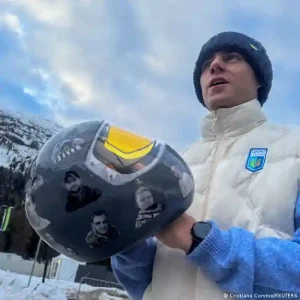
International Olympic Committee (IOC) President Kirsty Coventry informed him of his disqualification in a meeting early Thursday at the sliding venue.
Coventry waited for Heraskevych at the top of the track when he arrived around 8:15 a.m., about 75 minutes before the start of the men’s skeleton race.
They went into a private area and spoke briefly. Apparently, however, Coventry was unable to change Heraskevych’s mind.
Following the decision, Heraskevych briefly addressed reporters and said he would appeal to the Court of Arbitration for Sport: “It’s hard to say or put into words. It’s emptiness.”
What did IOC say?
Following her meeting with Heraskevych, Coventry also spoke with reporters. She was visibly emotional, with tears rolling down her face as she spoke.
“It’s a message of memory and no one is disagreeing with that,” Coventry said.
The IOC stated that it made its decision “with regret.”
“Despite multiple exchanges and in-person meetings between the IOC and Mr Heraskevych, the last one this morning with IOC President Kirsty Coventry, he did not consider any form of compromise,” the IOC said in a statement.
“The IOC was very keen for Mr Heraskevych to compete. This is why the IOC sat down with him to look for the most respectful way to address his desire to remember his fellow athletes who have lost their lives following Russia’s invasion of Ukraine. The essence of this case is not about the message, it is about where he wanted to express it,” the statement added.
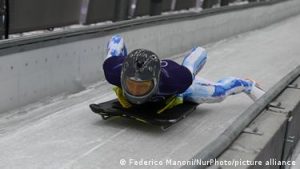
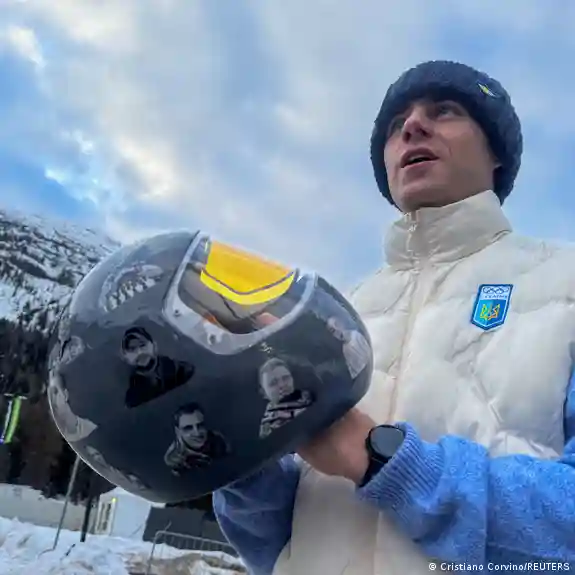
Heraskevych came to the Milan Cortina Olympics with a customized helmet displaying the faces of over 20 Ukrainian athletes and coaches who were killed in the war between Russia and Ukraine.
On Tuesday, the IOC announced that the helmet would not be permitted during the competition, citing a rule prohibiting political statements on the Olympic field of play. It offered a compromise solution allowing the athlete to wear a black armband instead but Heraskevych did not want to back down.
He wore a helmet during training on Tuesday and Wednesday, knowing that the IOC could ultimately disqualify him from the Olympic race.
At the last Olympics in Beijing in 2022, Heraskevych displayed a banner that read, “No War in Ukraine.” Russia launched its full-scale invasion of Ukraine four days after those Olympics ended.
Edited by: Sean Sinico
DW News

