



















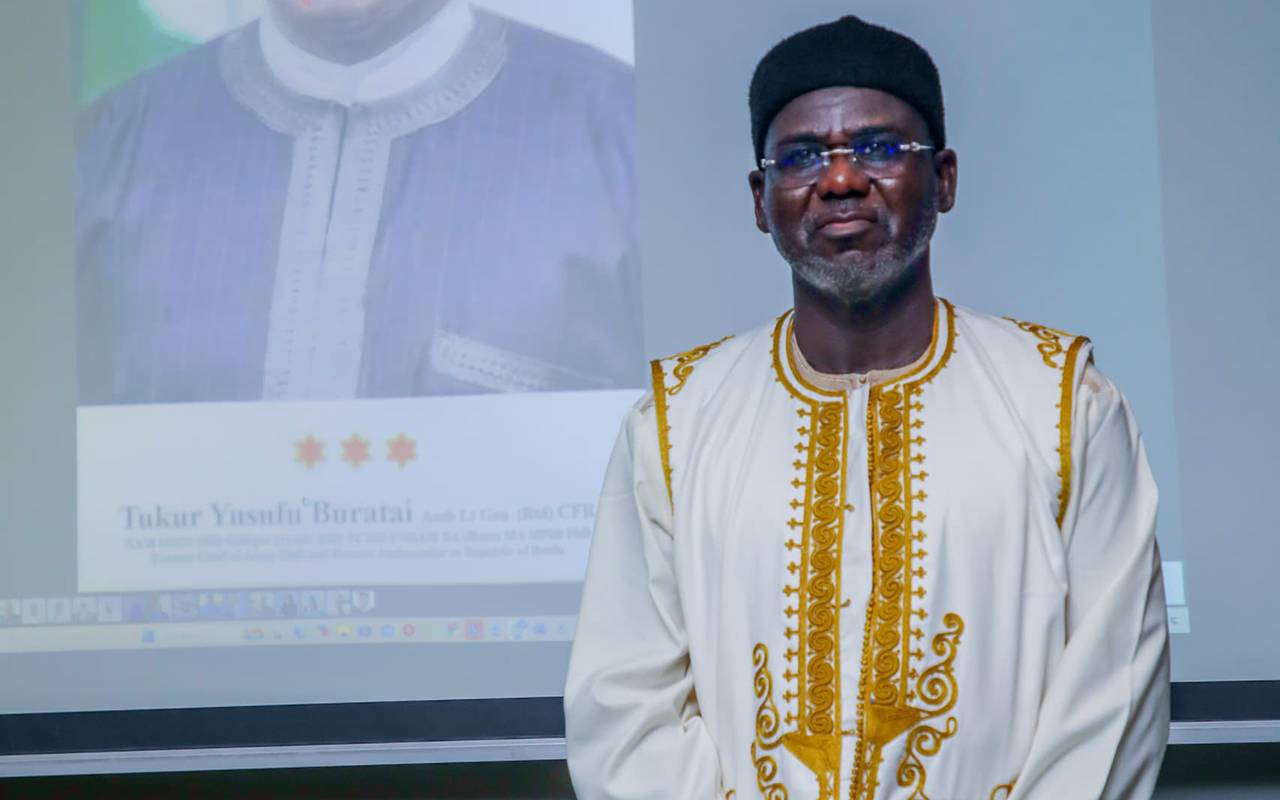
Former Chief of Army Staff, Lt.-Gen. Tukur Buratai (rtd.) has called for far-reaching reforms in the nation’s security and governance architecture to guarantee the country’s security.
He proposed five key policy recommendations aimed at translating Nigeria’s defence vision into actionable outcomes, including the professionalisation and specialisation of the military, the provision of well-equipped police to handle internal security, and the establishment of a National Defence Innovation Fund (NDIF).
Buratai made the proposal on Monday in Abuja in a lecture titled “Securing Nigeria’s Future: The Armed Forces and National Development,” which he delivered at the National Symposium/Lecture Series held to commemorate the 2026 Armed Forces Celebration and Remembrance Day (AFCRD).
He urged the country to reposition the armed forces as a catalyst for national development and long-term stability.
Buratai, also a former Nigerian. Ambassador to the Benin Republic, proposed five key policy recommendations aimed at translating Nigeria’s defence vision into actionable outcomes.On internal security, the former army chief said the police’s responsibility should be significantly expanded, and that they should be better equipped to handle it.
“The police should be professionalised under a funded, multi-year plan to attain a strength of about 1.5 million personnel, thereby dismantling the current dependency on the military for routine internal security duties.
He said the National Defence Innovation Fund (NDIF) should be established through public-private partnerships to finance research and development of critical dual-use technologies.
This should include cyber defence, unmanned aerial systems, satellite communications, and renewable energy solutions for forward operating bases, and would ensure that defence spending stimulates innovation within the civilian technology sector.
On human capital development, Buratai suggested a revised National Service and Veterans’ Framework, including reforming the National Youth Service Corps into a mandatory National Service Scheme with both military and civic tracks to promote skill acquisition and national cohesion.Musa said the Ministry of Defence, under the current administration, was prioritising troop welfare, enhanced training, doctrinal refinement and the expansion of indigenous defence production to ensure sustainable long-term security capabilities.
He said that ongoing policy and legislative reforms are revitalising local defence industries, encouraging private-sector participation, creating jobs, and deepening local content while reducing dependence on foreign suppliers.
The guardian

