










Rather than celebrating, Nigerian businesses are currently at a crossroad over what the future of the country holds for them, having had their fair share of the troubled economy in the last few decades.
Ranging from the power sector, to oil and gas, maritime, insurance, banking and finance, manufacturing, aviation, health and education among others, the industries are unmoved to celebrate what they described as ‘motion without movement’.
The Chief Executive Officer, Centre for the Promotion of Private Enterprise (CPPE), Muda Yusuf said the nation’s economy has recorded ‘sluggish growth’ with minimal development in the last 62 years.
He said: “The Nigerian economy had recorded an average growth performance over the past decades with a few instances of sluggish growth. However, the challenge of creating an inclusive growth trajectory remains a major concern. While the economy had experienced some positive growth trend over the past six decades, especially in the oil boom era, the impact on poverty, inequality and job creation has been very minimal. It is a case of growth with minimal development.”
Yusuf said the current state of the economy calls for concern, saying: “The country’s macroeconomic management framework continues to pose serious challenges to investors in the economy. This situation has been further compounded by the shocks and disruptions inflicted by the Russian invasion of Ukraine and the lingering effects of the COVID-19 pandemic.
“The fragile macroeconomic conditions remain a major cause for concern. The troubling macroeconomic situation have manifested in the following ways in recent years: weak and depreciating currency, high inflationary pressure, high and rising debt profile, exchange rate volatility, liquidity crisis in the foreign exchange market, increasing fiscal deficit, growing debt service burden, and the acceleration of money supply growth following the rising CBN financing of deficit.
“There are profound concerns around investment climate issues. High infrastructure deficit, cargo clearing challenges which has continued to worsen, high transactions cost at the ports, weak productivity in the real sector largely as a result of infrastructure conditions, regulatory challenges and policy inconsistency.
“Persistent importation of petroleum products had continued to put pressure on foreign reserves and weakening the capacity of the CBN to support the forex market. Petroleum refineries have remained non-performing over the years.
“The fiscal position of the federal government and the states are very weak, characterized by high fiscals deficit, high and increasing debt profile and the associated debt service burden is a cause for concern.
“The state of insecurity continues to take its toll on the economy, especially on agricultural output and fueling food inflation. It is also impacting the confidence of investors. The spate of oil theft and the associated leakages of government revenue are very troubling. Billions of dollars have been lost to this apparent failure of security effectiveness in the oil producing areas,” he stated.
Suggesting ways out of the crisis, he said: “There is a need for urgent steps to ensure a better macroeconomic management framework to stabilise the exchange rate, eradicate the challenge of illiquidity in the foreign exchange market and stem the current depreciation of the Naira. It is imperative to have urgent reforms in the foreign exchange market with greater focus on supply side strategy. There is need to review the current disproportionate emphasis on demand management of the foreign exchange market. Most sectors are experiencing serious disruptions and dislocations because of the current foreign exchange policy regime.
“There is need to strengthen strategies to attract private sector capital to compliment government financing of infrastructure. There is need to reduce the level of debt financing especially the reliance on commercial debt to fund government operations. Public debt, currently at N42.8 trillion is already at an unsustainable threshold.
“Steps should be taken to attract foreign exchange through a strategy of ensuring new investment opportunities to stimulate foreign capital inflows into the economy. We should be seeking more equity capital than debt capital.
“Need to review the country’s trade policy to support investment growth and investment sustainability. Tax policy must support investment not become a disincentive to investment.
“The security situation which has continued to deteriorate needs to be urgently addressed in order to mitigate the effects on investors’ confidence. There should be greater emphasis on quality intelligence in the war against terrorism.
“The oil and gas sector reform which is now being anchored on the Petroleum Industry Act (PIA) should be accelerated in order to ensure the unlocking of the enormous value in the oil and gas sector, particularly the gas sector.
“There should be an immediate cessation of the impunity that has characterised the stealing of crude oil and the attacks on oil installations.
“Institutional reforms are necessary to ensure that the regulatory institutions have better disposition to support the growth of investment and focus less on the generation of revenue,” he stated.
President, National Council of Managing Directors of Licensed Customs Agents (NCMDLCA), Lucky Amiwero, told The Guardian that the economy is still in shambles.
He accused the public office holders of lacking sincerity of purpose in their quest for policy formulation and implementation, urging them to look back into the ruins and chart a way forward for better Nigeria.
He said: “Just look at the port industry, it is bedeviled with lack of coordination everybody is just doing what he likes. Nigeria runs the most of the most expensive ports in the world, uncoordinated, unfocused and inefficient.
“Our exchange rate is skyrocketing. Our interest rate is skyrocketing; the economy is been badly battered. We know there are problems all over the world, but how are we managing our own? What are the indices; the oil, which we rely on, is being smuggled away. The quantity of oil that is moving out of the country is quite alarming. The Academic Staff Union of Universities (ASUU) has been on strike for several months. Most of our leaders have all their children abroad, so you will just discover that many of those people in government are not interested in our economy. All they want is just to make some money and fly away.
“When you are talking of 62 years of independence, what have we achieved, we don’t have any ship, we have not implemented some of the policies and we are not getting thing right,” he said.
Amiwero urged public officials at all levels to be patriotic and chart a way forward for the country with sincerity of purpose as we celebrate independence anniversary.
The Manufacturers Association of Nigeria (MAN) is also worried that the sector that should propel job creation, productivity and economic growth is troubled by a series of challenges.
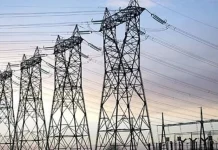
The association listed its challenges to include power supply, which remains a major headache for businesses; insecurity, decaying infrastructure, shortage of forex and naira depreciation, among others.
MAN President, Ahmed Mansur, noted that the economy cannot grow sustainably without a strong and competitive productive sector, since manufacturing sector is the engine of economic diversification and growth.
He stressed that a robust manufacturing sector should be based on coherent and coordinated efforts resulting from close collaboration between government and manufacturers.
He lamented challenges such as forex scarcity, inconsistent foreign exchange policies, inefficient transport infrastructure, high production cost, weak consumer demand and the new competitiveness pressure foisted by the AfCFTA and advised that efforts should be geared to solving these issues.
“There is the need to develop a strong infrastructural base, as extensive, cheap and affordable infrastructure is vital for the success of our economy,” he said.
the guardian

