
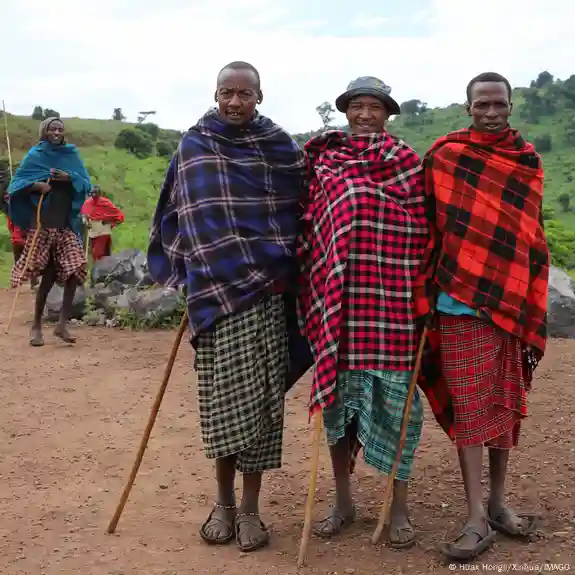
To force the Maasai to relocate, the Tanzanian government has cut essential services. Reports of violence and neglect are mounting, drawing criticism and causing the World Bank and EU to withdraw their support.
The Tanzanian government is forcing the Maasai to relocate from their ancestral lands in the Ngorongoro Conservation Area, Human Rights Watch (HRW) reported on Wednesday.
With over 82,000 Maasai being evicted, the rights watchdog stated that the government had violated their rights to land, education, and health without providing fair consent.
International outcry
“The Maasai are being forcibly evicted under the guise of voluntary relocation,” said Juliana Nnoko, HRW senior researcher on women and land.
The HRW report reveals that “government-employed rangers assaulted and beat residents with impunity,” with community members reporting 13 alleged incidents of beatings between September 2022 and July 2023.
The government claimed, that the scheme aims to protect the UNESCO World Heritage site from human encroachment.
HRW argued that the Tanzanian government wants to “use the Maasai lands for conservation and tourism purposes.” Due to this controversy, the World Bank and the European Union have withdrawn their funding.
Authorities cut infrastructure to encourage relocation
To pressure the community into relocating, the authorities have cut funding for schools and health centers, restricting access to essential care and increasing travel distances.
HRW reports that the service cuts led to severe consequences: one woman gave birth to premature twins in a car, with both babies dying from delayed care.
Additionally, three women died from pregnancy-related complications between April and May last year due to a lack of timely medical help.
Government denying Maasai voting rights – expert tells DW
“In the past three years, the government of Tanzania has been inflicting social and economic restrictions to the Maasai in Ngorongoro,” Denis Oleshangay, a lawyer and activist from Ngorongoro told DW.
He has been advocating for the Maasai in several cases, both in Tanzanian courts and in the East African Court of Justice.
“The community is denied rights to access important social services, like education, health and essential places for pasture, water and salt links,” Oleshangay adds.
He stated that the government, through the Ngorongoro Conservation Area Authority (NCAA), denied building permits for the renovation of collapsed structures, including classrooms, health facilities, and residential homes.
“Recently, the community has been complaining that the government is now stripping them of their voting rights and disenfranchising them, to facilitate their removal from Ngorongoro,” he states.
Oleshangay points out that, while the government listed polling stations nationwide, the villages in Ngorongoro were notably absent from the list.
Credit: DW news

