














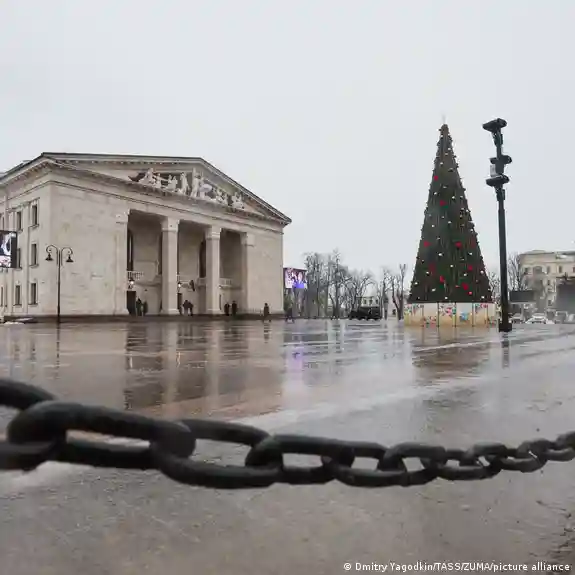
The bombing of the Mariupol Drama Theater became a symbol of Russia’s three-month siege of the city. Exiled Ukrainian municipal authorities condemned inauguration of the new theater as “singing and dancing on bones.”
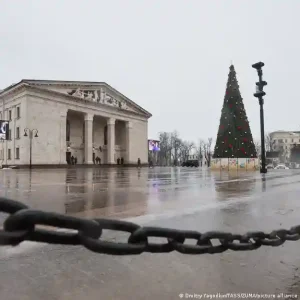
Russia has reopened a historic theater in the occupied Ukrainian city of Mariupol, more than three years after Russian forces pummeled it with an airstrike, killing civilians sheltering inside.
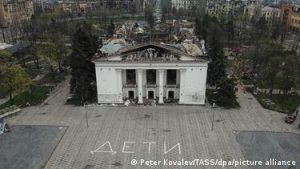
The attack on the Mariupol Drama Theater in 2022 killed 12 people, according to Human Rights Watch. Hundreds had been sheltering inside the theater and the world “children” had been written in giant letters on the street outside in order to be visible by fighter pilots.
The incident became a symbol of Russia’s three-month-long siege of Mariupol in which 90% of the city was destroyed, according to the United Nations, and some 8,000 were killed, according to Human Rights Watch.
Ukrainian authorities condemn ‘concealment’ of Mariupol atrocities
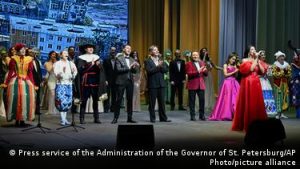
On Sunday, performers from Russian-occupied Mariupol staged a show in St. Petersburg to mark the reopening of the theater.
“Mariupol Drama Theater has reopened its doors to spectators” after a three year redevelopment, said Denis Pushilin, the pro-Russian leader in the Donetsk region, who attended the event.
St. Petersburg Governor Alexander Beglov said the city was a major contributor to the reconstruction of the theater, sending architects and other workers to Mariupol. He called the project “a question of honor.”
But the Mariupol municipal authorities that were exiled from the city after the Russian siege called the reopening “singing and dancing on bones.
“The ‘restoration’ of the theater is a cynical attempt to conceal the traces of a war crime and part of an aggressive policy of Russification of the city. The repertoire consists largely of works by Russian writers and playwrights,” the Ukrainian city authorities said in a statement on Telegram.
Russia announced the annexation of Donetsk — as well as the neighboring Ukrainian regions of Luhansk, Kherson and Zaporizhzhia — in 2022, although it does not fully control those areas.
Edited by: Roshni Majumdar
DW News

