

















The attention of the Adamawa State Government has been drawn to an article by one Ibrahim Ahmed Sabana, titled “Adamawa Government’s Misplaced Priorities: Luxury Projects in a Thirsty State.” While the writer’s concern for the welfare of Adamawa citizens is appreciated, the piece is unfortunately riddled with inaccuracies, half-truths, and emotional exaggerations that distort the facts before the public.
It is therefore imperative to set the record straight for the sake of truth, transparency, and informed public discourse.
1. The Fintiri Administration is Anchored on Transparency and Due Process
The claim that contracts are secretly awarded or reserved for political loyalists is false, misleading, and malicious. Every contract cited by the author, including the renovation of the Civil Service Commission (₦837m), the Presidential Lodge facelift (₦279m), the ADSIEC building (₦905m), and the Liaison Office in Abuja (₦794m), was duly approved by the State Executive Council (EXCO) and publicly announced through official government channels.
Governor Ahmadu Umaru Fintiri has made due process and accountability the cornerstone of his administration. All procurements follow the guidelines of the Adamawa State Bureau of Public Procurement (ADBPP), ensuring competitive bidding and value for money. No contract is awarded in secrecy; transparency remains the government’s hallmark.
2. Infrastructure Upgrades Are Not “Luxury Projects” but Strategic Investments
The writer’s description of these infrastructural efforts as “luxury” reveals a poor understanding of governance. The Civil Service Commission renovation is a workplace safety and efficiency intervention after decades of neglect.
The Presidential Lodge is a state asset whose upgrade reduces the cost of hosting dignitaries and federal delegations. The ADSIEC office complex is crucial for strengthening democratic institutions and preparing for local government elections.
The ₦181 million for height restriction barriers and signage at the flyovers are public safety projects, not cosmetic beautifications. Infrastructure development must serve both administrative efficiency and citizen welfare; these are not mutually exclusive priorities.
3. Water Provision: The Facts Speak for Themselves
Contrary to the false narrative that Adamawa is a “thirsty state,” the Fintiri-led government has invested heavily in urban and rural water supply schemes across the 21 Local Government Areas.
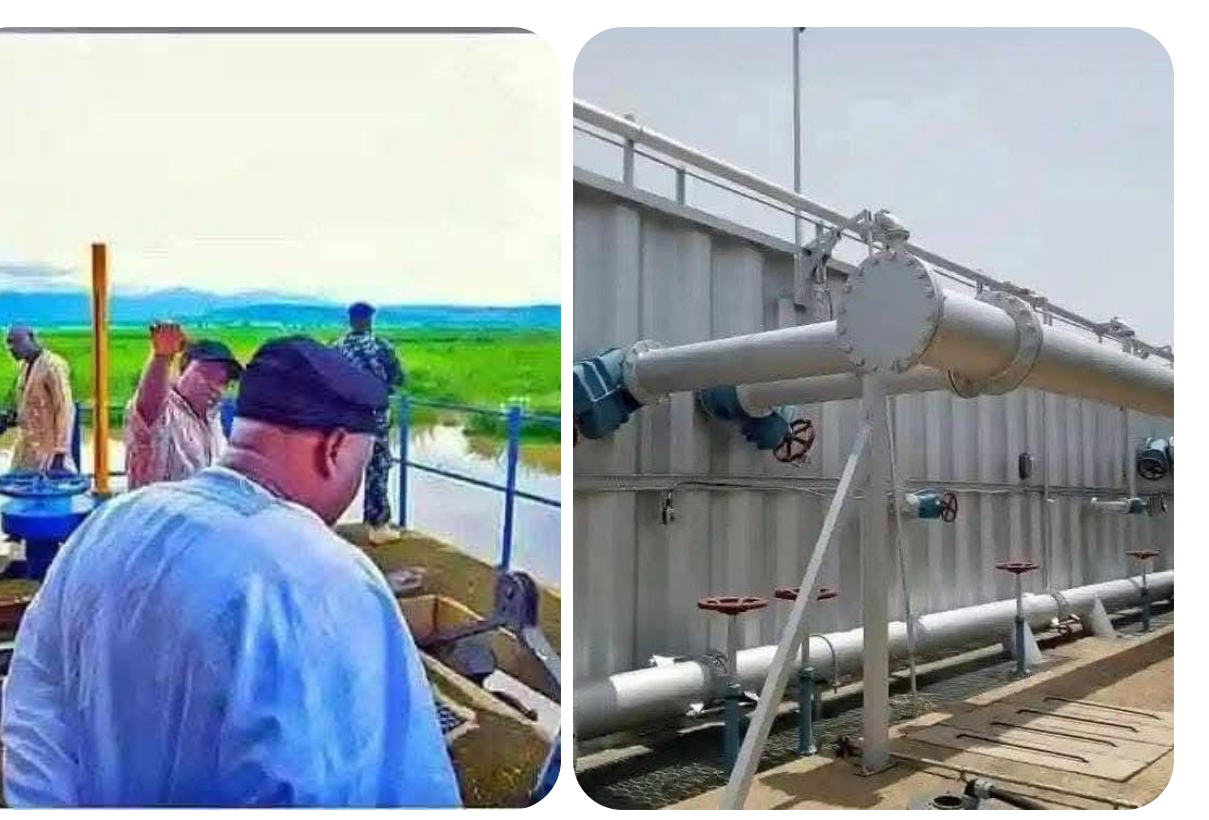
All existing treatment plants in Numan, Fufore, Mubi, and the two in Yola have undergone significant upgrades to improve capacity and efficiency. The Gulak Water Scheme (₦360m) and the Jada Township Water Project (₦481m) are ongoing, while numerous solar-powered boreholes have been installed in rural communities such as Gella, Lamurde, Borrong, Garkida, and Mapeo to provide sustainable clean water.
These interventions are verifiable, and the public is encouraged to visit these locations rather than rely on second-hand conjecture.
4. Rural Electrification and Connectivity
The government has equally prioritised rural electrification projects spread across communities in Hong, Gombi, Mayo-Belwa, Fufore, Shelleng, and Yola South LGAs, linking remote settlements to the national grid. The Ribadu–Sangere–Wuro Hausa electrification project, among others, has significantly improved rural access to power, promoting security, education, and small-scale enterprise.
5. Health Sector Transformation: From Neglect to Modernisation
The Fintiri administration has recorded unprecedented improvements in the health sector:
i. All general hospitals in the state have been renovated, with facilities and laboratories upgraded.
ii. The government procured CT scan and dialysis machines, making dialysis services completely free at the Adamawa Specialist Hospital, a first in the state’s history.
iii. Six cottage hospitals have been equipped with solar hybrid power systems, ensuring uninterrupted service delivery, particularly in rural areas.
iv. These interventions have reversed decades of neglect and positioned Adamawa as a model in public healthcare reform in the Northeast.
6. Sectoral Balance and Holistic Governance
Governor Fintiri’s administration has pursued balanced development, ensuring that every sector receives due attention:
i. Education: Over ₦4.3 billion invested in school rehabilitation, technical training, and tertiary infrastructure.
ii. Agriculture: Over ₦2.6 billion committed to farm inputs, mechanisation, and women/youth empowerment.
iii. Health and Water: Over ₦2 billion invested in health facilities and water supply schemes.
iv. Urban Renewal: The flyovers, township roads, and beautification projects have enhanced business and mobility.
These initiatives are designed to stimulate the economy, attract investment, and create jobs — not to decorate offices or serve political egos.
7. The Ethics of Responsible Commentary
While government welcomes constructive criticism, it must be said that deliberate distortion of facts is an ethical failure. Journalistic integrity demands fairness, verification, and objectivity. It is unfair and counterproductive to ignore visible progress simply to craft a narrative of failure.
Sabana’s article would have carried more moral weight had it balanced criticism with recognition of progress. As it stands, it reads more like an attempt to rubbish governance through fallacies, rather than to enlighten the public.
8. Conclusion: Adamawa is Progressing, Not Posturing
Adamawa is not thirsty; it is thirsting for truth in public discourse. The Fintiri-led administration has shown courage, vision, and accountability, rebuilding the state’s social and physical infrastructure brick by brick.
Governance is not about glamour; it is about delivering a system that works, and Adamawa today is working. From upgraded water treatment plants to revitalised hospitals, rural electrification, improved roads, and administrative efficiency, every sector has received attention.
We therefore urge writers, analysts, and citizens to engage government with facts, not fiction; with balance, not bias. The truth is that Adamawa State is on the path of genuine transformation, and no amount of distortion can erase visible progress.
Communication, Research and Documentation
Office of the Governor,
Adamawa State Government House, Yola
Date: 25th October, 2025

