















The Nigerian National Petroleum Company Limited (NNPC Ltd.) remitted the full proceeds from Production Sharing Contract (PSC) profits to the Federation Account in February 2026, reflecting the implementation of Executive Order 09 recently signed by President Bola Tinubu, THISDAY has learnt.
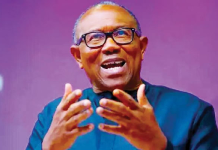
This is just as the Presidency has dismissed claims by former Anambra State governor and presidential candidate of the Labour Party (LP) in the 2023 general election, Mr. Peter Obi, that Nigeria’s rising petrol prices were largely due to the absence of a strategic petroleum reserve, describing the argument as inaccurate and based on a misunderstanding of global energy market dynamics.
Meanwhile, the Imo State Governor, Senator Hope Uzodimma, has said that President Tinubu has shielded Nigeria from the global fuel crisis resulting from the conflict in the Middle East.
Figures contained in a document presented at the March meeting of the Federation Account Allocation Committee (FAAC) showed that the government received 100 per cent of PSC profit generated during the month, amounting to N121.343 billion, bringing the total remittance for January and February to N137.409 billion.
The document sighted by THISDAY indicated that in January 2026, before the executive order took effect, 40 per cent of the PSC profit hitherto remitted to the Federation stood at just N16.066 billion. The difference between January and February remittance was about N105.33 billion.
Titled: ‘February 2026 NNPC Oil & Gas Revenue and Distribution to FAAC,’ the NNPC presentation to the FAAC meeting held this March showed that the remittance represented the entire federation’s share of PSC profits, marking a change in distribution following the enforcement of the presidential order.
Besides, the annual budget estimate for PSC profit was N2.368 trillion, translating to a monthly budget target of N197.367 billion and a year-to-date budget projection of N394.733 billion for the first two months of the year.
However, actual receipts fell significantly short of projections, according to a THISDAY analysis. Compared to the year-to-date budget benchmark of N394.733 billion, the federation recorded a shortfall of N257.324 billion, representing a 65.2 per cent variance below target.
Despite the shortfall, the February remittance reflected the new policy framework under Executive Order 09, which directed that PSC profits be transferred fully to the federation account.
A note that followed the presentation said: “The budget estimates for 2025 were retained pending publication of 2026 budget estimates. For January 2026, PSC distribution was carried out in line with the PIA (Petroleum Industry Act)- prescribed 30:30:40 distribution ratio. However, from February 2026, PSC distribution complies with Executive Order 9, 2026.”
Issued by Tinubu in February 2026, Executive Order 9 mandates direct remittance of all oil and gas revenues (royalties, taxes, profit oil/gas) into the Federation Account.
Meanwhile, another key line in the FAAC presentation concerned the calendarised interim dividend expected from the NNPC.
The document showed that the annual budget estimate for interim dividends from the national oil company was N3.254 trillion, equivalent to a monthly target of N271.184 billion and a two-month budget projection of N542.368 billion.
But the NNPC did not record an interim dividend for either January or February, leaving the year-to-date actual figure at zero.
In fact, this resulted in a negative variance of N542.368 billion, meaning the federation received none of the dividend income anticipated in the budget during the first two months of the year.
In the same vein, the large variance in the revenue profile highlights ongoing challenges in Nigeria’s oil sector, especially production constraints, which have led the country to produce significantly below its Organisation of Petroleum Exporting Countries (OPEC) quota of 1.5 million barrels per day.
Presidency Counters Obi on Petrol Price Hike, Says Strategic Reserve Not Solution
Responding to Obi’s remarks, the Special Assistant to the President on social media, Mr. Olusegun Dada, said the recent increase in petrol prices was primarily the result of market forces following the deregulation of the petroleum sector by Tinubu’s administration.
In a statement posted on his X (formerly Twitter) handle, Dada explained that, in a deregulated market, fuel prices were influenced by several global factors, including crude oil prices, exchange rates, shipping costs, and supply risks.
According to him, the removal of fuel subsidy had allowed market realities to determine pump prices, meaning developments in the international oil market now directly affect domestic fuel costs.
“In a deregulated system, petrol prices respond directly to global oil prices, exchange rates, shipping costs and supply risks,” Dada said.
He noted that geopolitical tensions involving Iran have recently contributed to an increase in global oil prices, adding that such developments inevitably affect countries like Nigeria that rely heavily on imported refined petroleum products.
The presidential aide also rejected suggestions that establishing a strategic petroleum reserve would automatically stabilise or control everyday pump prices.
According to him, even countries with large strategic petroleum reserves maintain them primarily for emergencies such as wars, embargoes, or major supply disruptions, rather than for routine price management.
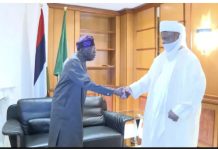
In another development, Imo State Governor, Uzodimma, has said President Tinubu has shielded Nigeria from the global fuel crisis.
Speaking when the members of the City Boy Movement visited him at the Government House, Owerri, at the weekend, Uzodimma said Tinubu’s reforms prevented scarcity and domestic fuel price hikes despite the Middle East crisis.
He said that despite the ongoing war in the Middle East, the naira remained stable at N1,240, while other African currencies faced significant volatility.
THIS DAY

