
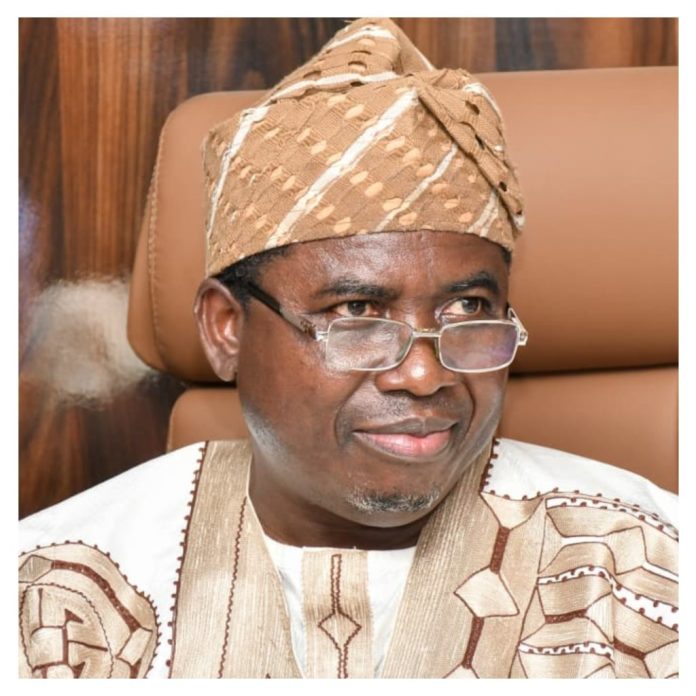
The chairman of the Independent National Electoral Commission, INEC, Professor Joash Amupitan, SAN, has outlined key priorities aimed at strengthening Nigeria’s electoral system, with emphasis on electoral reform, infrastructure development and voter education, during his maiden interactive meeting with the Senate Committee on Electoral Matters.
The meeting, held at Room 107 of the Senate New Wing on Tuesday, December 16, 2025, marked Professor Amupitan’s first formal engagement with the Committee since his assumption of office. He was accompanied by the full complement of National Commissioners, the Secretary to the Commission, and the Chairman’s technical aides, reflecting the importance INEC attached to the interaction. Members of the Senate Committee present included the Chairman, Senator Simon Bako Lalong, as well as Senators Adams Oshiomhole, Tony Nwoye, Ireti Kingibe, Ede Dafinone, Emma Nwachukwu, Kelvin Chukwu, and Sunday Katum.
In his remarks, Prof. Amupitan acknowledged the Senate Committee on Electoral Matters as a critical pillar in Nigeria’s democratic architecture, noting that its legislative and oversight responsibilities directly impact the stability and credibility of the nation’s electoral system. He expressed appreciation to the Senate for the rigorous confirmation process that preceded his appointment, describing the engagement as a demonstration of institutional collaboration anchored on constitutional principles.
Reflecting on the early days of his tenure, the INEC Chairman recalled that the Commission was immediately confronted with the conduct of the Anambra Governorship Election of November 8, 2025. He reported that the election was successfully concluded in a single day, a notable departure from previous experiences, and attributed the outcome to effective inter-agency cooperation and the support of the National Assembly and other stakeholders. According to him, the exercise provided valuable lessons and insights into areas requiring further improvement, particularly in logistics and operational efficiency.
Prof. Amupitan emphasised that Nigeria’s electoral system operates within a tripartite framework comprising the Constitution, the Electoral Act, and INEC’s Regulations and Guidelines. While the Commission is empowered to conduct elections and issue regulations, he stressed that these responsibilities must remain consistent with the provisions of the Constitution and the laws enacted by the National Assembly. He commended the legislature for granting INEC the opportunity to contribute to the ongoing process of constitutional and electoral amendments.
Outlining his vision for the Commission, the INEC Chairman stated that supporting the National Assembly in achieving meaningful electoral reforms remains a core priority of his leadership. He further emphasised the need to strengthen existing infrastructure and deploy technology in a manner that enhances transparency, credibility, and inclusiveness in the electoral process. He acknowledged the challenges associated with public perception and expectations, emphasising the importance of adhering to constitutionalism, due process, and institutional boundaries in the conduct of elections.
The INEC chairman also identified voter education as a critical mandate that will receive increased attention under his leadership, noting that informed participation by citizens is essential to the integrity and credibility of elections. He emphasised the central role of logistics in electoral success and observed that preparations for forthcoming elections, including the FCT Area Council Election and other off-cycle elections scheduled for 2026, are closely linked to the timely conclusion of electoral reforms by the National Assembly.
Earlier in his remarks, the Chairman of the Senate Committee on Electoral Matters, Senator Simon Bako Lalong, welcomed Prof. Amupitan and his delegation, describing the interactive session as a significant milestone in efforts to strengthen Nigeria’s democratic institutions. He reaffirmed the central role of INEC in shaping public confidence in governance and stressed that credible elections remain fundamental to democratic legitimacy.
Senator Lalong congratulated the INEC Chairman on his appointment and noted that he assumed office at a time of heightened public expectations and evolving challenges, including technological innovation, voter education, electoral security, logistics, and public trust. He assured the Commission of the Committee’s readiness to provide legislative support, constructive oversight, and policy guidance to enable INEC to effectively discharge its constitutional mandate.
He emphasised that the interactive session was designed to promote frank dialogue and institutional collaboration rather than ceremonial engagement. While reaffirming the Committee’s commitment to electoral reforms through legislation and budgetary support, Senator Lalong stressed that oversight does not amount to interference, noting that respect for INEC’s constitutional independence remains a guiding principle.
Daily post

