




















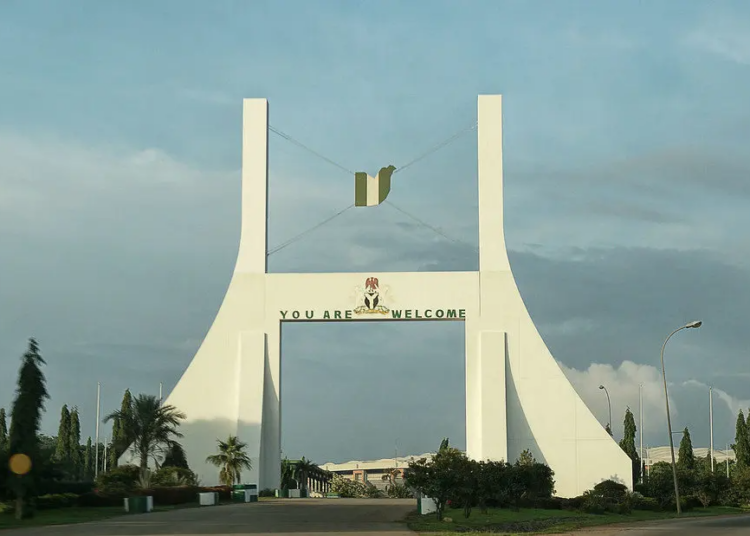
Since Nigeria’s return to democratic rule in 1999, the Federal Capital Territory (FCT) has carved out a unique political identity, defying the notion of a monolithic voting bloc loyal to the ruling party at the centre.
Unlike many states that have become entrenched strongholds for either the Peoples Democratic Party (PDP) or the All Progressives Congress (APC), the FCT has consistently functioned as a competitive swing territory.
Its voting patterns reveal a politically astute, heterogeneous electorate that prioritises performance and local issues over federal allegiance, making it a critical bellwether in national elections.
In the formative years of the Fourth Republic, the FCT aligned with the national mood, delivering victories for the PDP in the 1999, 2003, and 2007 presidential elections.This was unsurprising, given the PDP’s dominance nationally and the significant population of civil servants and political appointees whose fortunes were tied to the ruling party.
However, this support was never absolute or unquestioning. Even in these early elections, the margins in the FCT were often more competitive than in many PDP strongholds, hinting at an underlying independence.
The true character of the FCT electorate emerged dramatically in 2011. Amid a nationwide wave of support for the incumbent President Goodluck Jonathan, the FCT staged a stunning revolt.
It rejected the ruling PDP and awarded its presidential vote to the opposition Congress for Progressive Change (CPC) candidate, Muhammadu Buhari.
This was a seismic shift, driven largely by the predominantly Muslim population in Abuja’s satellite towns and rural communities who connected with Buhari’s message and perceived the Jonathan administration as unfavourable.
This result shattered any illusion of automatic FCT loyalty to the party in power.
The 2015 election further cemented the FCT’s swing status. As the opposition APC coalesced into a formidable force, the FCT swung decisively behind the Buhari/Osinbajo ticket, contributing to the historic defeat of the PDP.
Crucially, when Buhari sought re-election in 2019 as the incumbent (now under the APC banner), the FCT did not simply rubber-stamp his rule. While Buhari won the national poll, the PDP’s Atiku Abubakar won the FCT by a narrow margin.
This flip demonstrated that residents were willing to hold an incumbent APC administration accountable, voting based on perceived shortcomings in governance, security, and the economy rather than party affiliation.
The 2023 election continued this trend of competitive independence. In a highly contested three-way race, the FCT delivered a clear victory not to the ruling APC’s Bola Tinubu, but to the Labour Party’s Peter Obi.
This outcome underscored several key factors, like the influence of a large, youthful demographic, the “Obidient” movement, the potency of anti-establishment sentiment, and the continued relevance of candidate appeal over pure party machinery.
The APC placed third in the FCT, a stark reminder that controlling the federal government does not guarantee electoral success in the capital.
Several factors explain this consistent swing behaviour. First, the FCT’s population is highly diverse, comprising educated elites, civil servants, a burgeoning youth population, and indigenous communities, each with distinct priorities.
Second, as the seat of government, residents are acutely aware of national policy failures, from insecurity to infrastructure deficits, and vote accordingly.
Third, the absence of a dominant “godfather” or entrenched political machine allows for more fluid voter movement.
The narrative of the FCT since 1999 is not one of unbroken victory for the ruling party but of a fiercely independent and discerning electorate.
Residents have voted across party lines for PDP, CPC, APC, and Labour Party candidates, using their ballot as a direct feedback mechanism on federal performance.
The FCT has consistently acted as a political barometer, often signalling national shifts before they fully materialise.
Its defiant voting pattern confirms that in Nigeria’s often polarised democracy, the capital territory remains a dynamic, unpredictable, and critically important swing state.
Leadership

