





















Prominent British-Egyptian democracy advocate Alaa Abd el-Fattah has been freed after years of detention. His release follows a petition from Egypt’s human rights council and increased international pressure.
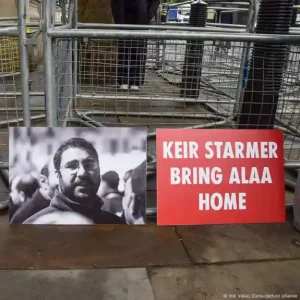
Egyptian President Abdel Fattah el-Sissi on Monday granted a presidential pardon to British-Egyptian dual national activist and blogger Alaa Abd el-Fattah.
Abd el-Fattah was expected to be released from prison after his sentence ended in September 2024, but he has remained in custody in Egypt.
Why is Abd el-Fattah being released now?
The pardon comes just days after el-Sissi asked officials to review a petition from the National Council for Human Rights seeking clemency for several detainees, including Abd el-Fattah.
A Cairo criminal court had also recently removed him from the country’s terrorism list, saying there was no evidence tying him to the outlawed Muslim Brotherhood.
“The Egyptian president issues a pardon for the remainder of the prison sentence for a number of convicted persons, after taking the constitutional and legal procedures in this regard,” said Al-Qahera News, which is linked to Egypt’s state intelligence services.
“The pardon includes… Alaa Ahmed Seif El-Islam Abd el-Fattah,” it added, using Abd el-Fattah’s full name.
International pressure on Cairo had been mounting. The British government repeatedly raised Abd el-Fattah’s case, including in talks between Prime Minister Keir Starmer and el-Sissi, while the United Nations called his detention arbitrary and demanded his release.
The pardon removes one of Egypt’s most high-profile dissidents from a prison system criticized by rights groups for mass arrests and harsh conditions, though many other activists remain detained.
Family members had waged their own campaign to secure the release. His mother, academic and activist Laila Soueif, ended a 10-month hunger strike only recently.

Abd el-Fattah himself began a partial hunger strike in March and escalated to a full one at the start of September in solidarity with her.
Who is Abd el-Fattah?
The 43-year-old, a central figure in Egypt’s 2011 uprising, has spent much of the past 10 years behind bars under every Egyptian administration since the Arab Spring.
He was first imprisoned in 2014 for joining an unauthorized protest and allegedly assaulting a police officer, before being released in early 2019.
Following his later arrest in 2019, Abd el-Fattah was sentenced in December 2021 to five years in prison for “spreading false news” after sharing a Facebook post about alleged torture in Egyptian jails.
Abd el-Fattah staged his most dramatic hunger strike in 2022 while Egypt hosted a UN climate summit in Sharm el-Sheikh. The protest ended only after he lost consciousness and had to be revived with fluids.
At that time, the leaders of Britain, France and Germany said they sought the release of Abd el-Fattah in private talks with el-Sissi.
Edited by: Karl Sexton
DW News

