

















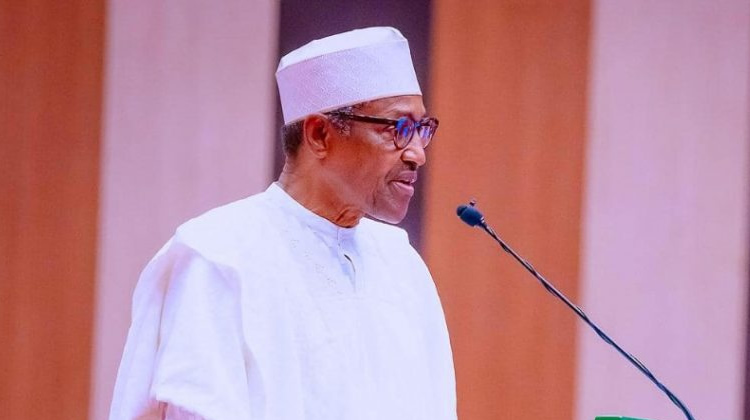
Areport by the National Bureau of Statistics (NBS) has revealed that weapons worth N124 billion were imported into Nigeria in four years under President Muhammadu Buhari administration.
The report further revealed that arms and ammunition worth N8.368bn were brought into the country in the third quarter of 2022.
Although the report did not state the particular agency which imported the arms and ammunition, the data used for the report is said to have emanated from the Nigerian Customs Service (NCS) through the Integrated Customs Information System, the Nigerian National Petroleum Corporation Limited (NNPCL), various companies in the upstream and downstream sectors of the oil industry, the Central Bank of Nigeria (CBN), Angila International Limited, Neroli Technologies Limited, Gojopal Nigeria Limited, Carmine Assayer Limited, the Federal Airports Authority of Nigeria, the Nigeria Civil Aviation Authority and the Nigerian Ports Authority (NPA), among others.
Also contained in the report was the importation of arms and ammunition in 2018.
According to the report, in 2018, N1.946bn worth of arms and ammunition were imported into the country, while in 2019, N12.773bn was spent on the importation of arms and ammunition.
Similarly, in 2020, N29.236bn worth of arms was imported. In 2021, N72.5bn in arms and ammunition were imported, and in the third quarter of 2022, N8.368bn was spent on the importation of the commodities.
The summation of the cost of the arms and ammunition amounts to a total of N124.82bn between 2018 and 2022.
Recall that there had been debate over whether or not to begin the manufacturing of weapons in Nigeria to reduce the cost of arms and ammunition importation.
In 2021 at a ministerial retreat, President Buhari promised that the Defence Industries Corporation of Nigeria would be resuscitated to produce weapons locally.
PUNCH quoted a security expert, Oladele Fajana, as believing that since Nigeria has been unable to produce weapons, importing is the next option.
“It is good if we can produce our weapons ourselves. Even if we import, we won’t solely be depending on foreign countries for our weapons.
“I have seen some equipment being produced by DICON; they are trying; they just need to be encouraged and well-funded.
“However, the funds required to revive that company are greater than the funds spent on the importation of these weapons, but we have no choice but to import,” Fajana said.
SAHARA REPORTERS

