
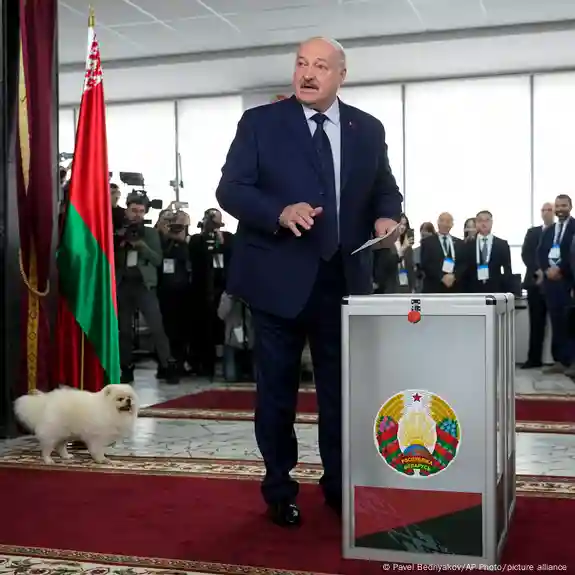
Belarusian leader Alexander Lukashenko is set to cruise to victory after more than 30 years in power. Sunday’s presidential election has been slammed as a sham, with his rivals broadly seen as government stooges.
Polling stations opened in Belarus on Sunday for a presidential election in which long-time leader Alexander Lukashenko — in power since 1994 — is seen as certain to be declared the winner.
More than four years after the last election, opposition members viewed as posing any real threat have either fled abroad or are in prison.
What we know about the election
Lukashenko is standing against four candidates, three of whom are outwardly loyal to him and represent pro-government parties.
The fourth challenger, Hanna Kanapatskaya, has voiced cautious opposition to some of Lukashenko’s policies, touting herself as the “only democratic alternative to Lukashenko,” while also warning supporters against “excessive initiative.”
Kanapatskaya has said she recognizes Lukashenko as the winner of the 2020 contest — in which she garnered 1.7% of the vote — denounced by outside observers as fraudulent.
Casting his vote on Sunday, Lukashenko said Belarus had a “brutal democracy,” while adding: “We don’t put pressure on anyone and we won’t silence anyone.”
However, he added that prison was “for people who opened their mouths too wide, to put it bluntly, those who broke the law.”
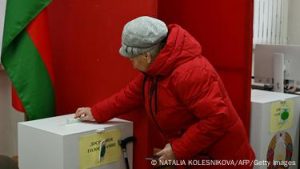
‘A senseless farce’
Opposition leader-in-exile Sviatlana Tsikhanouskaya, who left Belarus under government pressure after challenging for the presidency in 2020, described Sunday’s election as “a Lukashenko ritual.”
“What is happening in Belarus today is a farce,” she told reporters in Warsaw, branding Lukashenko “a criminal who has seized power.” Tsikhanouskaya called for the release of all political prisoners and free and far elections.
Human rights activists criticize the fact that more than 1,200 people are in political imprisonment in the country after mass protests that followed the last election.
Kaja Kallas, the EU’s top diplomat, tweeted that Lukashenko had no legitimacy and was seeking to “reappoint himself in yet another sham election.”
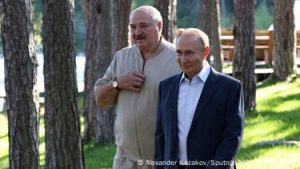
Since 2020, when he allowed Belarus to be used as a staging post for Russia’s invasion of Ukraine, Lukashenko has become politically and economically reliant on Moscow.
Some analysts have suggested the 70-year-old isgrooming his 20-year-old son Nikolai, who has joined his father on many official engagements, as a successor. As he voted on Sunday, Lukashenko dismissed the notion, saying that none of his sons wanted to take over.
What can we expect this time?
Some 6.9 million people are eligible to vote in the country of more than 9 million, which is the last in Europe to retain the death penalty.
Polling stations close at 8 p.m. local time (1700 GMT/UTC).
In 2020, the electoral commission awarded Lukashenko 80.1% of the vote — with 84.38% voter turnout.
That triggered mass protests across the country, which Lukashenko violently suppressed — with help from the Kremlin. The United Nations estimates that some 300,000 people have left Belarus since then.
According to official figures, 41.81% of eligible voters had already voted before the actual election day. Critics see early voting as a tool used by the authorities in Belarus to manipulate voter turnout and results.
DW News

