









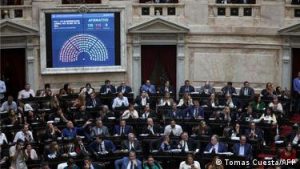
Argentina’s lower house of Congress approved President Javier Milei’s labor reform bill, which grants employers greater flexibility in matters of hiring, firing, severance and collective bargaining.
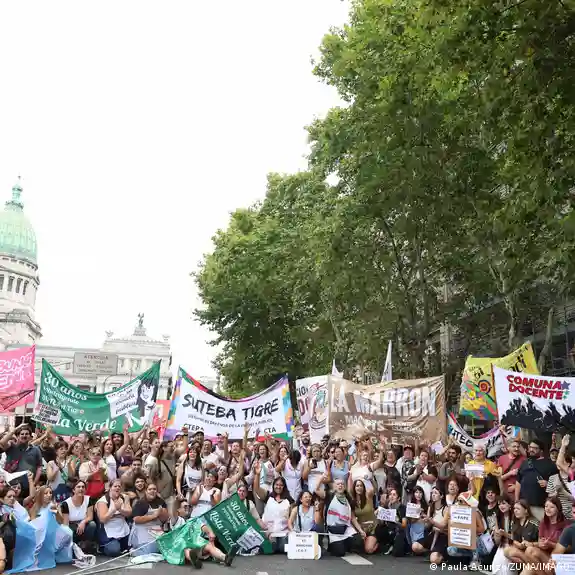
Argentine workers staged a general strike on Thursday to protest a labor reform bill backed by libertarian President Javier Milei that they argue would curb historic worker protections.
The bill was passed by the Senate last week, before the lower house of Congress passed it by 135 votes in favor and 115 against on Friday. It will be sent back to the Senate for a final vote before it becomes law.
Why is the bill controversial?
Unions warn the bill would cut workers’ rights that have been entrenched in Argentina since the 1940s.
The bill would:
Limit the right to strike
Reduce unions’ bargaining power
Make it easier for companies to fire workers
Extend probation periods
Curb workers’ ability to sue employers upon dismissal
Cut severance pay, traditionally high in Argentina
Empower employers to mandate 12-hour workdays (instead of the current 8)
The bill is supported by the ruling party and its center-right allies. The government argues it will spur investment and boost formal employment.
Nearly 40% of Argentina’s workers do not have formal employment contracts. Unions warn the new bill would only exacerbate the situation, but the government argues it will reduce under-the-table employment and create new jobs by lowering taxes on employers.
The bill is in line with Milei’s austerity policies, which he has been implementing since taking office. The Argentine president, who is strongly supported by Donald Trump, boasts bringing annual inflation down from 150% to 32% in two years.
But this has come at the expense of massive public sector job cuts and a decline in disposable income.
What do we know about the general strike?
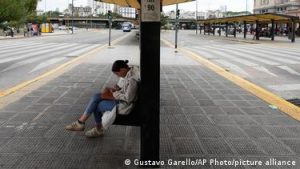
Workers at factories, banks, hospitals, shops, aviation and public transport took part in Thursday’s strike, the fourth general strike since Milei became president in December 2023.
Garbage collectors also took part, with piles of garbage dotting the streets on Thursday.
Small groups of protesters blocked traffic on roads leading into the capital, with several thousand demonstrators gathering outside parliament.
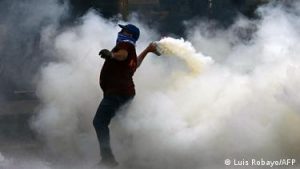
Skirmishes between protesters and police saw the use of tear gas, water cannons and rubber bullets, before arrests were made.
Argentina’s powerful CGT union said this strike was observed by more workers than any other strike since Milei became president.
“It has levels of compliance like never before under this government,” union leader Jorge Sola told Radio con Vos, saying “90% of activity had stopped.”
Edited by: Roshni Majumdar
DW News

