







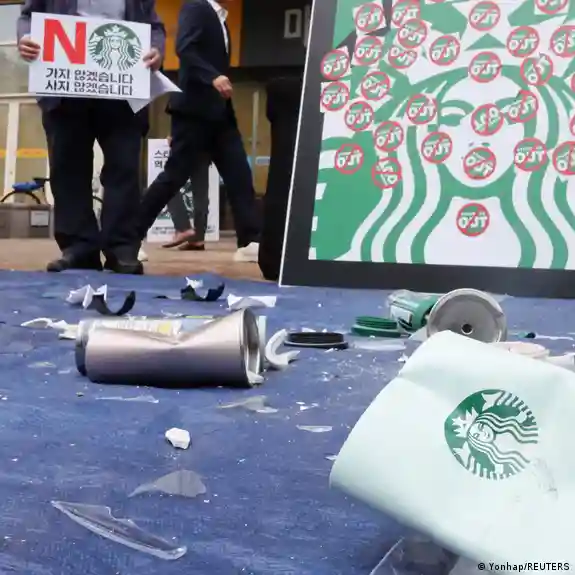
Starbucks Korea faced major backlash after being accused of trivializing a 1980 massacre. Police say their internal investigation was not thorough enough.
“The Seoul police raided the headquarters of Starbucks Korea this morning as part of the ongoing investigation,” said a spokesman for the Shinsegae Group, which operates Starbucks Korea.
What was the controversial promotion?
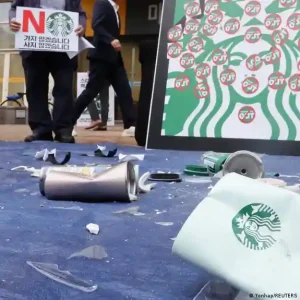
This past May, Starbucks advertised large to-go cups they called “tank tumblers” and seemed to refer to the Gwangju Uprising as “tank day.”
On May 18, 1980, the ruling military junta violently put down a pro-democracy protest in the city of Gwangju. At least 165 civilians were killed when the army rolled tanks out into the streets to quell the demonstation.
The Starbucks promotional event also appeared to allude to statements made by the government at the time to deny that they had tortured a student protest leader to death.
The backlash was swift, and led to protest and boycotts against the coffee giant in what is the company’s third-largest market after the United States and China.
President Lee Jae Myung also expressed his outrage, and Shinsegae Group chairman Chung Yong-jin and Starbucks Korea CEO Son Jung-hyun resigned following a public apology.
What are police investigating?
Starbucks Korea said it conducted its own internal investigation into the matter and found no evidence of wrongdoing. However, the firm admitted that the inquiry had been hampered by, amongst other things, not being able to compel the people involved in planning the promotion to hand over their phones.
Police told the Yonhap agency they were looking for evidence that executives knowingly trivialized the 1980 massacre.
Edited by: Roshni Majumdar
DW News

