
















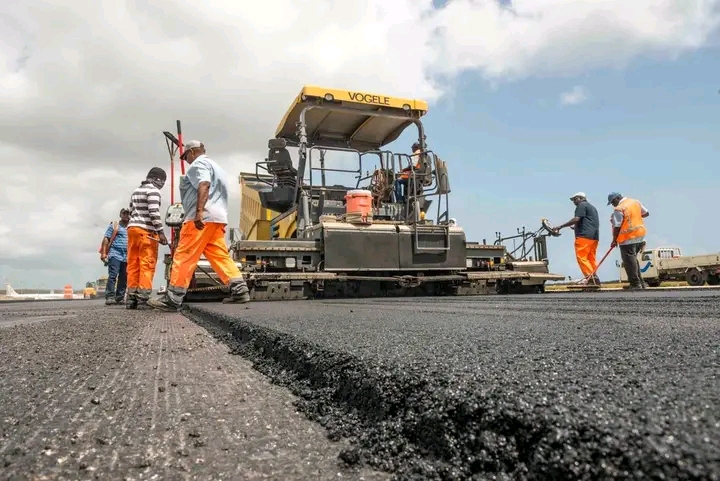
Long roads, especially highways and expressways, often take a long time to complete in Nigeria due to many reasons and factors. The most prominent among them is the slow pace of work by contractors, which is sometimes compounded by funding challenges, variation in project scope, inflation, and logistical constraints. These delays not only increase project costs but also prolong hardship for road users, slow economic activities, and contribute to accidents and vehicle maintenance costs.
For example: On 20 December 2017, the Federal Government awarded the rehabilitation of the over 430 km Abuja–Kaduna–Zaria–Kano dual carriageway to Julius Berger Nigeria Plc. The contract was later terminated in November 2024 due to delays, cost disputes, and issues relating to performance. The Federal Government subsequently re-awarded the contract to Infouest Nigeria Ltd, and work is now progressing at a faster pace, with visible improvements in mobilization, equipment deployment, and manpower across several sections of the corridor.
Similarly, the rehabilitation/reconstruction of the 127 km Lagos–Ibadan Expressway was awarded in July 2013 by the Federal Government to Julius Berger Nigeria Plc and Reynolds Construction Company (RCC) at a cost of about ₦167 billion. The project was expected to significantly ease traffic congestion between Lagos and the rest of the country, given the strategic economic importance of the route.
However, after about 13 years, the rehabilitation/reconstruction of the Lagos–Ibadan Expressway has still not been fully completed. While Julius Berger completed its section, the remaining portions under the second phase have continued to experience delays, with some sections still unfinished. This has led to prolonged inconvenience for commuters and businesses that rely heavily on the corridor for the movement of goods and services.
It appears that the rehabilitation, reconstruction, or construction of long roads in Nigeria consumes a considerable amount of time. Nigeria should therefore consider adopting an alternative approach to handling long-distance road projects. One practical method is to divide such projects into manageable segments and assign them to multiple contractors simultaneously.
For instance, any construction, reconstruction, or rehabilitation of long roads could be divided into segments of about 25 km per construction firm. A 100 km road, for example, could be handled by four different contractors working at the same time. This approach would bring more equipment, increased manpower, and faster execution. It would also create healthy competition among the companies, encouraging adherence to timelines and improved quality of work. Additionally, this method reduces the risk associated with relying on a single contractor, as delays in one segment would not necessarily stall the entire project.
Furthermore, segmenting projects allows for better monitoring and evaluation by government agencies, improves accountability, and makes it easier to enforce performance benchmarks. It also provides opportunities for more indigenous construction companies to participate in major infrastructure development, thereby strengthening local capacity in the construction sector.
Although this approach has been used in some projects, it is not yet widely adopted as a standard policy. Institutionalizing it could introduce a more efficient and results-driven framework for road delivery across the country.
The federal and state governments should therefore experiment with this method on major road projects. If properly implemented, it may assist Nigeria in building more roads in record time, reduce construction delays, improve road quality, and accelerate economic growth across the country.
✍️ Zayyad

