















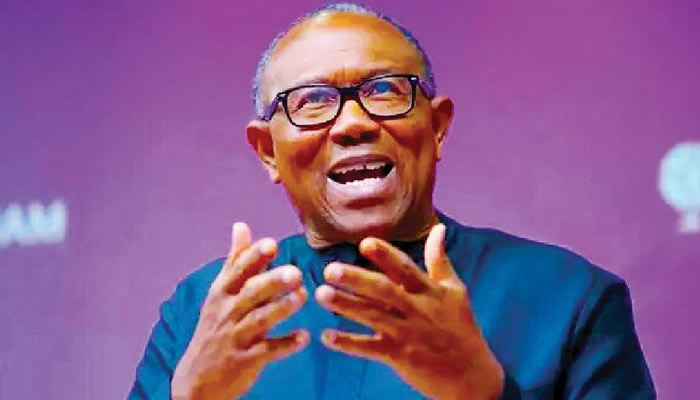
The Presidency has dismissed claims by former Anambra State governor and Labour Party presidential candidate in 2023, Mr Peter Obi, that the rise in Nigeria’s fuel prices was largely due to the absence of a strategic petroleum reserve, describing the argument as inaccurate and a misunderstanding of how global energy markets operate.
Responding to Obi’s remarks, the special assistant to the president on social media, Olusegun Dada, said the recent increase in petrol prices in Nigeria was primarily a result of market forces following the deregulation of the petroleum sector by the present administration.
In a statement posted on his X (formerly Twitter) handle, Dada explained that in a deregulated market, petrol prices naturally respond to global factors such as crude oil prices, exchange rates, shipping costs and supply risks.
According to him, the removal of fuel subsidy has allowed the market to determine pump prices, meaning that developments in the international oil market directly influence domestic fuel costs.
He noted that geopolitical tensions involving Iran had contributed to rising global oil prices, which in turn affect countries that depend heavily on imported refined petroleum products.
“In a deregulated system, petrol prices respond directly to global oil prices, exchange rates, shipping costs and supply risks,” Dada said.
So when geopolitical tensions involving Iran push global oil prices upward, countries that rely heavily on imported refined products like Nigeria will inevitably feel the effect at the pump.”
The presidential aide also rejected suggestions that establishing a strategic petroleum reserve would automatically stabilise or control everyday pump prices.
He argued that even countries with large strategic reserves maintain them primarily for emergencies such as wars, embargoes or major supply disruptions rather than routine price management.
Dada pointed out that Nigeria’s long-standing energy challenge is largely structural, particularly the country’s limited domestic refining capacity and heavy reliance on imported refined products despite being a major crude oil producer.
According to him, this imbalance, combined with pressure on the foreign exchange market, has historically exposed Nigeria to fluctuations in global oil prices.
He added that meaningful long-term planning for the energy sector should focus on expanding domestic refining capacity, strengthening supply chains, stabilising the foreign exchange environment and maintaining consistent energy policies.
Dada further reminded Obi that during the 2023 presidential campaign, the former governor had publicly stated that he would remove fuel subsidy if elected.
According to him, the current policy framework that allows petrol prices to reflect market realities is consistent with positions previously supported by the Labour Party candidate.
He urged political leaders to avoid oversimplifying complex economic issues, stressing that global energy markets involve multiple interconnected factors that cannot be reduced to a single policy question.
LEADERSHIP

