










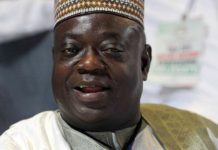




The chairman and chief executive officer of Wealthy Honey Investments Nigeria Limited, Dr Farinto Kayode, has cautioned against any form of attack on foreigners involved in freight forwarding and cargo clearance operations at the nation’s seaports.
Speaking at a colloquium organised by the Nigerian Economic Growth Forum (NEGF) in Apapa, Lagos, to mark his birthday, Farinto warned that Nigeria risks losing about N3 trillion annually due to the Federal Government’s inability to effectively harness the country’s blue economy potential.
The event, themed “Raising National Awareness on the Significance and Economic Potential of the Blue Economy,” focused on unlocking opportunities within Nigeria’s maritime and aquatic resources.
Farinto lamented that foreign interests have increasingly dominated Nigeria’s aquatic resources and freight forwarding industry, leaving indigenous operators at a disadvantage.
He recalled that during his tenure on the governing council of the Council for the Regulation of Freight Forwarding in Nigeria, he proposed an “indigenisation of freight forwarding” policy aimed at strengthening local participation in the sector.
“I saw it coming,” he said. “The way we are going, foreigners will take over not just our aquatic resources but also the freight forwarding industry.”
While noting that the Nigeria Customs Service remains largely under local control, he expressed concern that increasing foreign participation in key economic sectors could fuel social tensions if not properly managed. Drawing parallels with past xenophobic incidents in other African countries, Farinto warned that failure to address perceived economic imbalances could heighten the risk of unrest.
He further decried the decline of indigenous shipping operators, noting that local shrimpers and vessel owners have virtually disappeared from Nigeria’s waterways.
According to him, poor management of the Cabotage Vessel Financing Fund (CVFF) has compounded the challenge, limiting access to capital for local operators.
Farinto estimated that a well-structured blue economy strategy could generate over N3 trillion annually for the Federal Government, potentially rivaling revenue from the Nigeria Customs Service.
He emphasised that improved investment in aquaculture, capacity building, maritime education, and indigenous shipping would significantly boost revenue generation and reduce capital flight.
“Nigeria, as a maritime nation, is losing enormous revenue because the blue economy has not been well thought out or properly implemented,” he said.
Farinto maintained that if sustainably developed in line with global best practices and the Sustainable Development Goals, the blue economy could become a major pillar of Nigeria’s economic growth.
Leadership news

