





















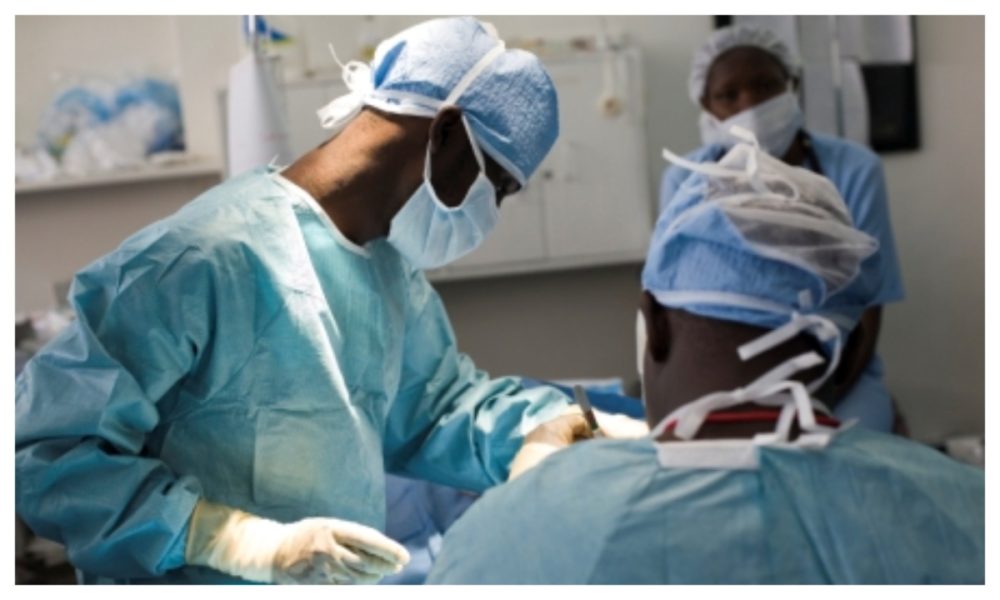
The recurring death of patients in emergency situations, allegedly due to hospital negligence has sparked widespread public concern across the country.
In many healthcare facilities, critically ill patients reportedly face delays in receiving urgent medical attention, sometimes resulting in preventable fatalities.
Families of victims are left devastated, while public confidence in health institutions continues to erode.
What initially appeared to be isolated complaints has now grown into a national outcry, with citizens demanding a comprehensive overhaul of hospital management systems and emergency response protocols.
Speaking in a telephone interview with DAILY POST, Chief Medical Officer of Afebablola University, Prof. Akiola Akimade, addressed the concerns.
According to him, “In every case, the first priority of hospitals is to save lives. By training, doctors and nurses are taught that the patient’s survival comes first, and everything else follows.
“There may be instances, such as emergencies involving gunshot victims, where hospitals face challenges.
“But the standard protocol is always to stabilize and secure the patient’s life first; questions and other procedures come afterwards. That’s the ideal approach.”
DAILY POST reported several cases, including that of Aishatu Umar Kano, a mother of five who died after a surgical procedure.
A subsequent scan revealed that a pair of scissors had been left inside her body during a previous operation in September.
For four months, she returned to the hospital complaining of pain but was reportedly only given pain relievers until it was too late.
In a separate telephone interview with DAILY POST, activist Eneh Obi described the situation as “very disappointing,” questioning what has become of humanity within the healthcare system.
“It’s very disappointing, you know, the reactions of hospitals. What is humanity all about?”
“You can get money from people, but it’s not all the time. When life is supposed to be saved, that should be the focus of hospitals,” she stated.
Eneh condemned the recurring reports of hospitals allegedly rejecting patients over issues such as lack of deposits, insufficient drugs, or absence of necessary medical supplies.
She noted that the problem extends beyond high-profile cases, including victims of gunshot wounds or snake bites.
“You have cases of women who want to go and have a baby and the hospital doors are not open to them. So many people who have emergencies come to the hospital, their doors are closed. We’ve had children dying because they wouldn’t accept the child because there is no deposit,” she said.
She further blamed weak government policy implementation and a lack of accountability within the healthcare system.
“The value of life for Nigerians is so flimsy. When somebody dies, they say the person is gone. But governance is about the protection of life, the welfare of the people, and the security of the country,” Obi stated.
The activist also questioned the government’s commitment to expanding and equipping public hospitals, particularly for low-income citizens.
“When last did you hear that new government hospitals have been opened for the poor? Don’t we have resources?
“Can’t we build and equip hospitals and make services affordable? Why should many people die so carelessly?” She asked.
While acknowledging that some patients may be unable to pay immediately, Eneh emphasized that emergency care should never be conditional.
“In emergencies, you don’t know who is rich or poor. You need to save lives before you start thinking of payment,” she added, calling for stronger corporate social responsibility within private healthcare institutions.
She concluded by urging authorities to move beyond rhetoric and enforce existing health laws aimed at protecting patients.
“It’s unfortunate. We have so many laws we cannot implement. The government should seek direction for the welfare of the people,” she said.
Preventable deaths due to hospital neglect are a tragedy that can no longer be ignored.
Immediate reforms, accountability, and better resource management are crucial to saving lives and restoring public trust in our healthcare system.
daily post

