













Stakeholders on Tuesday called for multi-sectoral collaboration to ensure cost-efficient, sustainable interventions and stronger domestic financing to sustain Nigeria’s HIV and Tuberculosis response, amid dwindling foreign aid support.
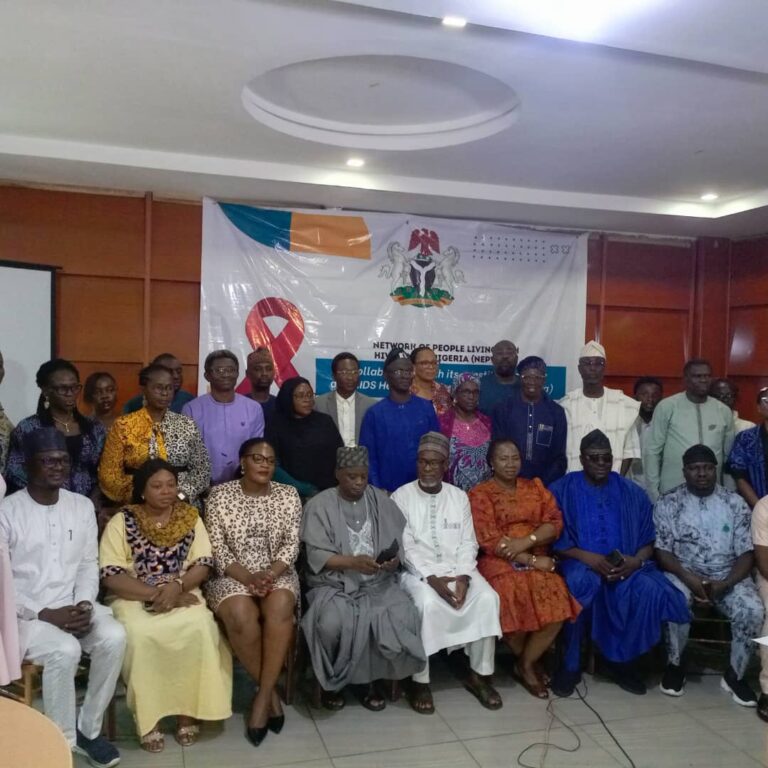
The call was made at a stakeholders’ dialogue on domestic financing for HIV, TB, and the domestication of the HIV anti-stigma law, organised by the Network of People Living with HIV/AIDS in Nigeria, in collaboration with the AIDS Healthcare Foundation, and other partners in Abuja.
Recent government actions, including the allocation of N4.8bn for HIV treatment and the establishment of an AIDS Trust Fund, signal commitment, but financing remains grossly insufficient to meet national needs.
Similarly, although the HIV/AIDS Anti-Discrimination Act of 2014 prohibits stigma and discrimination against persons based on their HIV status, the lived experiences of People Living with HIV/AIDS tell a different story, as many still face widespread stigma and exclusion, particularly in states that have failed to domesticate and enforce the provisions of the law.
The dialogue, therefore, aimed to catalyse action, fostering collaboration among key stakeholders, state and non-state actors, the business community, international and national non-governmental organisations, civil society organisations, community-based organisations, and the general population. Speaking at the meeting, the Chairman of the House Committee on HIV/AIDS, Tuberculosis, Leprosy, and Malaria Control, Amobi Ogah, emphasised that Nigeria must take ownership of its health response rather than depend solely on external donors.
Ogah, represented by his deputy, Abubakar Zango, stated that Nigeria needs an estimated $8bn annually to sustain the response against HIV/AIDS. But in the face of recent changes in the global funding landscape, occasioned by the suspension of funding for African health systems by the U.S. government, further gaps in funding will negatively impact the country’s fight against HIV/AIDS and TB.
“It is my opinion that the suspension of funding of Africa’s health systems by the U.S. government is a blessing in disguise because I believe that the Nigerian government must take the lead in funding the response to public health threats such as HIV, Tuberculosis, and Malaria, and not rely solely on foreign interventions.
“Since the withdrawal of funding, Nigerians in both the public and private spaces have begun conversations on how to rejig our financing architecture.
“So far, many brilliant and innovative solutions on how to mobilise domestic funding for the response against HIV and TB in Nigeria have been rolled out. But there is a need to streamline some of these solutions and, if need be, provide a legislative framework for their implementation,” he said. He further called for multi-sectoral collaboration and stronger partnerships among civil society organisations, government, and the private sector to ensure cost-efficient and sustainable interventions.
The National Coordinator of NEPWHAN, Abdulkadir Ibrahim, emphasised the urgency of strengthening domestic health financing, especially for HIV, due to uncertainties in global health funding and shifts in U.S. government policy.
He stated that about 80–85 per cent of HIV funding in Nigeria comes from foreign aid, while the Nigerian government contributes only about 15 per cent. He stressed the need to look inward for sustainable financing through health insurance schemes, local philanthropy, and domestic resource mobilisation, since free drugs are ultimately funded by taxpayers abroad.
“We are looking into issues around health insurance, how our people will be registered into a health insurance scheme, which will be more sustainable and affordable if people have to pay.
“The drugs that people are currently getting for free are being paid for by someone—it is taxpayers’ money, either from the US or from contributions by other countries.
“We need to look inward and dialogue on where resources will come from. I don’t have all the answers, but I am sure we will eventually find a lasting solution,” Ibrahim said.
The Chairman of NEPWHAN’s Board of Trustees, Abdul-Rahman Momodu, emphasised commitment and leadership in the fight against HIV.
Momodu noted that HIV is not just a health issue but also a social one that must be openly addressed.
The Country Programme Director, AHF Nigeria, Dr. Echey Ijezie, pledged continued support for the HIV response and expressed confidence that the three-day discussions would produce valuable outcomes to guide future actions. We hope that at the end of the day, we’re going to have good points for us to run with from this event,” he said
The punch

