














As s the crisis between states and electricity distribution companies continues to degenerate over who has the power to fix electricity tariffs, the Federal Government, through the Nigerian Electricity Regulatory Commission, has summoned all the stakeholders to a meeting scheduled for next week, The PUNCH reports.
Energy commissioners of state governments, under their umbrella body known as the Forum of Commissioners for Power and Energy in Nigeria, have repeatedly insisted that the Electricity Act, 2023 (Amended), has empowered state governments to regulate their respective power markets.
But power distribution companies, under the aegis of the Association of Nigerian Electricity Distributors, The tariff ordered by the Enugu Electricity Regulatory Commission recently also sparked the reactions of power generation companies, including the Niger Delta Power Holding Company, as the Gencos argued that states have no power to dictate the cost of power from the national grid.
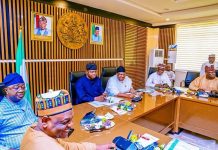
To de-escalate the situation, the national regulator, NERC, has invited all the actors involved in the imbroglio to a meeting scheduled to be held next week in Lagos, as the Discos declared again on Thursday that the states should not destroy the power sector with the quest to regulate electricity tariffs.
The General Manager of Public Affairs at NERC, Dr Usman Abba-Arabi, told one of our correspondents in an interview on Thursday that the meeting would discuss the matters and proffer solutions to them.
The NERC spokesman maintained that invitations have been sent to the state regulatory commissions, the distribution companies, and other stakeholders in the Nigerian Electricity Supply Industry.
“The next Nigerian Electricity Supply Industry stakeholders meeting is scheduled for next week in Lagos. State Regulatory Commissions have been invited to attend. The Discos and other industry players will all be in attendance. It’s a forum where industry issues will be discussed and solutions proffered,” he stated.
Abba-Arabi stated that the meeting is purely for the industry and would be done without the attention of the press.
Discos talk tough The crisis between the Discos and state governments started in July when the Enugu Electricity Regulatory Commission announced that it had slashed the Band A tariff from N209 per kilowatt-hour to N160/kWh, ordering MainPower Electricity Distribution Limited to implement this from August 1, 2025.
As the new tariff regime began on the stated date, MainPower’s energy supplier, the Enugu Electricity Distribution Company, had to cut supply to Enugu by 50 per cent, leaving many customers in darkness. MainPower explained that EEDC had calculated that implementing the tariff cut would lead to monthly losses exceeding N1bn, undermining its obligations to the market.
Reacting to the development during an interview with one of our correspondents on Thursday, the Chief Executive Officer of the Association of Nigerian Electricity Distributors, Sunday Oduntan, warned states and their newly established regulatory agencies not to destroy the power sector.
Oduntan, who is also the spokesman of the Discos, argued that what the Enugu Electricity Regulatory Commission was planning would not work, saying it was an attempt to draw back the sector. According to him, the Electricity Act, 2023 (Amended), allows the states to generate, transmit, and distribute electricity within their respective states, but does not give them the power to put a price on cross-border electricity from the national grid.
He said states would only control electricity tariffs when they start generating, transmitting, and distributing the same. He accused the EERC of having plans to regulate the cost of a product that does not belong to the state regulator.
“The Electricity Act, 2023 (Amended), allows the states to generate, transmit, and distribute electricity within their respective states. That is just the summary of that law. It is to enable them to take care of their own electricity issues. Now, what happened in Enugu was that the electricity regulatory commission in the state wanted to control the price of a product that does not belong to them.
“Let me explain what I mean: if they generate electricity in Enugu State, and they transmit and distribute it within Enugu State, they have the right to fix the price. But the law is very clear: they are not in charge of cross-border tariffs. What do I mean by cross-border tariffs? This is a product that has crossed outside the borders of your state, for instance, from the national grid. The PUNCH reports that after complaints of blackouts and vending glitches, MainPower restored power to Enugu residents, but at the old cost. The Disco ignored the new tariff order that slashed the Band A tariff to charge N209/kWh. Electricity customers in the state said they now pay the old rate after power was restored by MainPower.
However, the EERC kicked against this. It accused MainPower of tariff breach while threatening sanctions. In a public notice, the commission stated that it has come to its attention that Mainpower Electricity Distribution Company Limited has reverted to charging its Band A customers N209.50/kWh, as against the commission’s order of 160.40/kWh.
The commission expressed displeasure that “this violation” persists despite prior directives from the commission mandating strict compliance with the tariff order. “Such actions constitute a breach of the Tariff Order by Mainpower Electricity Distribution Limited,” the commission said, urging Band A customers in Enugu State to report overbilling.
“Band A customers who have been billed above the approved rate are urged to report the discrepancy to the commission with evidence of the breach for necessary regulatory action, which may involve imposing appropriate sanctions on MainPower,” the EERC warned.
Recall that NERC had earlier told the Enugu regulator that any state that wanted to slash tariffs should be ready to pay the shortfall. “As states do not have jurisdiction over the national grid and over electric power stations established under federal laws/operating under licences issued by the commission, they must holistically incorporate the wholesale costs of grid supply to their states without any qualification or deviation in their design of tariffs for end-use customers in order not to distort the dynamics of the market or be prepared to make a policy intervention by way of a subsidy for any deviation in the tariff structure that distorts the wholesale generation, transmission and legacy financing costs in the Nigeria Electricity Supply Industry,” NERC said in July.
But Enugu and other states disagreed with claims by NERC that sub-national entities cannot fix electricity tariffs because they do not generate and transmit electricity. The Special Adviser to the Enugu Governor on Power, Joe Aneke, said states have the power to design tariffs as far as distribution is concerned.
Aneke said the new tariff by the Enugu Electricity Regulatory Commission did not tamper with the costs of generation and transmission, saying it based its calculations on distribution only.
The Forum of Commissioners for Power and Energy in Nigeria said in a statement that NERC does not have overriding regulatory authority over electricity distribution and tariff setting, noting that the fifth constitutional alteration and the 2023 Act give states exclusive jurisdiction over electricity distribution, whether connected to the national grid or not, emphasising the power of states to adjust tariffs.
Aneke clarified that the EERC’s new tariff would not distort the electricity market because it did not affect generation and transmission. “It’s possible to reduce tariffs, and on the other hand, it’s equally possible to increase them, but these are subject to facts, figures, and numbers. Why am I saying so? Recall that the subnationals do not regulate generation. And in this tariff determination, which Enugu did, the cost of generation was not tampered with at all. It still stays as it is because we know we don’t regulate generation, and we don’t regulate transmission. That is the work of NERC. None of those costs were touched.
“So, why is it not possible for state regulatory commissions to fix tariffs, having been given the law, having the power, having the numbers, and having jaw-jawed with the subcos, with their figures on the table? Let me go to the granular. Everybody here appreciates the fact that there are certain variables and costs that are used or considered before tariffs are determined. If these figures are laid bare, you see that some are not realistic, just to avoid using certain words, and some cannot be sustained. The argument of the presentation cannot be sustained,” Aneke said.
Giving an example, he said MainPower claimed a sum of N9bn for recovery, but the figure was not up to that.
“For instance, a lump sum that was presented at about N9bn. When we got into the nitty-gritty, we looked at the facts, the figures, the numbers, the customer numbers, and the so-called lifeline. We have now discovered that what they presented wasn’t correct. They tacitly understood that and accepted it,” he said.
However, MainPower, in a petition to the commission, said the tariff order published on July 18 was not agreed upon by the parties and that the same did not comply with Regulation No. EERC/R004.
The Disco averred that Section 4.1(c) provides that “in order to avoid ‘gold-plating’ in the tariff using rate of return regulation, the licensee shall be required to review costs with the commission. It is the cost agreed with the commission that shall be allowed for the operator to use in the tariff model for the determination of the price that shall apply in contracts. “This is because the value chain of the electricity business in Enugu State shall be subject to contracts, and prices shall be determined based on the applicable methodology published by the commission on its website. The review process for the cost shall be as prescribed in the Schedules to these Regulations.”
The punch

