


32.1 C
Abuja
HomeNewsJAMB more credible than some politicians, clergy, says Omokri

JAMB more credible than some politicians, clergy, says Omokri

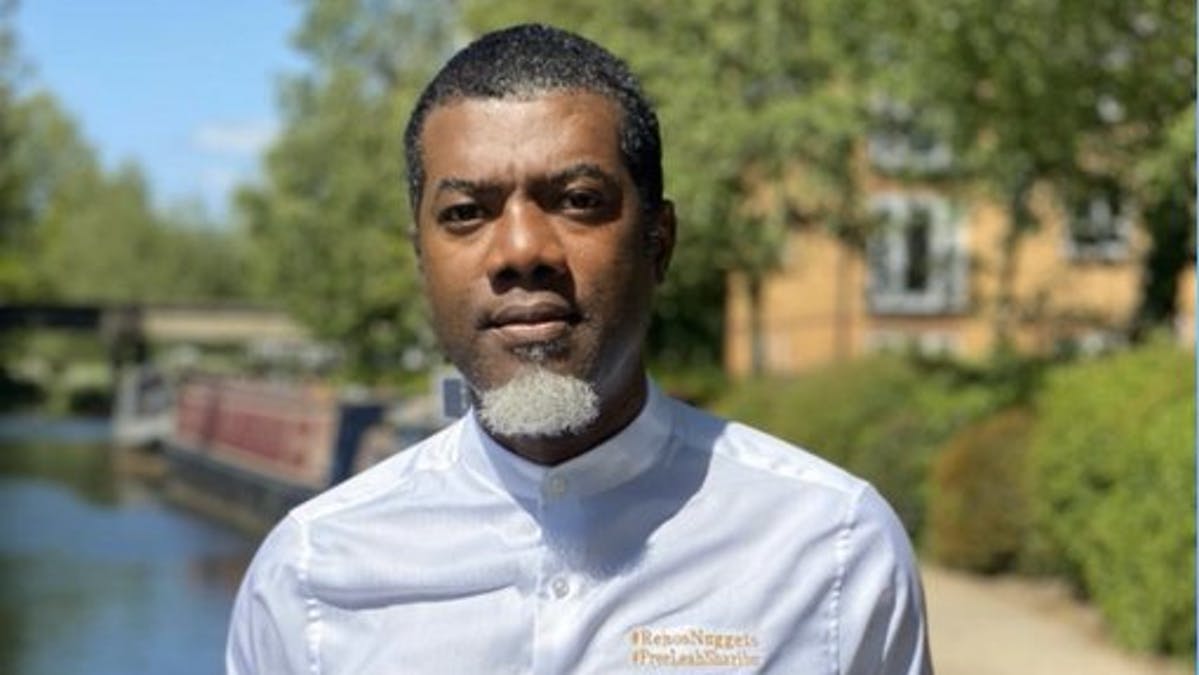
Former presidential aide, Reno Omokri, has said the Joint Admissions and Matriculation Board (JAMB) has shown more accountability in the wake of the 2025 UTME technical challenges than some prominent Nigerian politicians and religious leaders.

Omokri made the statement on his official Facebook page following the public apology issued by the JAMB Registrar, Prof. Ishaq Oloyede, over the system glitch that affected several candidates during the examination.

He commended the Registrar for taking personal responsibility and offering remedial steps to address the issue, describing the move as an uncommon gesture.

“Not only did the Registrar General of the Joint Admissions and Matriculation Board take full personal responsibility, but he also provided remedial solutions to indemnify those affected by the unfortunate incident,” Omokri stated.

He argued that public figures in Nigeria rarely accept responsibility for errors, using examples from politics and the church. “If you think it is easy, ask yourself this: How many big politicians, pastors, churches, and others in society have made errors and admitted them?” he asked.

Omokri referred to a leaked audio involving former presidential candidate, Peter Obi, where he was heard describing the 2023 general elections as a “religious war.”

“Has he ever admitted to that? We know it was his voice,” Omokri claimed, adding that two years later, Obi had yet to pursue legal action against the media platform that leaked the audio.

He further recalled an interview on Arise TV where Obi reportedly declined to directly answer whether it was his voice on the tape, despite the question being asked multiple times.

Turning to religious leaders, Omokri referenced past statements by Pastor Tunde Bakare of Citadel Global Community Church. He cited an interview Bakare granted to *Punch* newspaper in 2006, where the pastor declared by the “Spirit of God” that certain Nigerian political figures, including Muhammadu Buhari, represented the old political order. Omokri noted that Bakare later became Buhari’s running mate in the 2011 elections, contrary to his earlier declaration. “He later said that he was the anointed ‘sixteenth’ President of Nigeria and that the matter had been settled,” Omokri stated, quoting Bakare as saying: “I make it plain this morning, I let you know it this morning, nothing can change it in the name of Jesus. He (Buhari) is number 15, I am number 16.”

Omokri said Bakare had yet to apologise for his earlier claims, yet continues to critique others.

He also criticised Pastor Paul Enenche of Dunamis International Gospel Centre, referencing an incident where Enenche urged his congregation to instruct others on who to vote for, including mentioning specific names and images. Omokri described the act as unethical, claiming it breached both the church’s registration status and Nigeria’s Electoral Act.

“By engaging in open and partisan political campaigning while on the pulpit, even to the point of telling people who to vote for, with their photos, Pastor Enenche violated that provision, and the Body of Christ would not tolerate that coming from a prominent Muslim cleric,” Omokri said. He alleged that Enenche’s conduct, if done in countries like the United States or the United Kingdom, could have attracted sanctions, including revocation of preaching licenses and tax exemptions.

Omokri also referenced a statement Enenche made on January 29, 2023, where the pastor criticised an unnamed political candidate, describing them as lacking transparency in key aspects of their background.

Omokri argued that such statements could lead to unrest in Nigeria’s multi-religious society.

He added that, rather than apologise, Enenche pursued legal action against him, which Omokri claimed was dismissed in his favour.

He reiterated that the JAMB registrar’s apology demonstrated a level of courage that is uncommon among public figures in Nigeria. “In light of this, Nigerians should understand that what JAMB did took courage. Courage that is in short supply in Nigeria,” Omokri said.

THE GUARDIAN

Previous article
Former Kaduna State Governor, Nasir El-Rufai, is currently at a political crossroads following the failure of his recent defection to the Social Democratic Party, SDP, to gain traction across the North-West region. On March 10, 2025, El-Rufai formally announced his resignation from the ruling All Progressives Congress, APC, citing what he described as a growing “misalignment between his values and the direction of the party.” In his statement, El-Rufai publicly pledged to rally opposition leaders and political parties into a formidable bloc capable of unseating the APC in upcoming elections. “Without prejudice to this decision, as a member of the SDP, I will focus on engaging with and persuading other opposition leaders and parties to join us and congregate under a unified democratic platform to challenge the APC in all elections and bye-elections between now and 2027, by the Grace of God,” El-Rufai stated shortly after his move to the SDP. But two months later, DAILY POST has observed that those promises appear to have fallen flat. Despite a series of closed-door meetings and tireless efforts, the former FCT Minister has been unable to convince any major political player in the North-West to align with the SDP. At the moment, the SDP has no structure in any of the northwest states, including: Jigawa, Kaduna, Kano, Katsina, Kebbi, Sokoto and Zamfara. Sources familiar with the developments told our reporter that El-Rufai had made “frantic efforts” to win over governors in the key North-Western states of Kano, Kaduna, Katsina and Kebbi, but all such attempts were “fruitless.” “He reached out to key players, especially governors and sitting senators and reps, but none gave him a positive response. Not even a state assembly member,” a source who was privy to some of the discussions told our reporter. “He was even the first person who approached Senators Adamu Aliero, Yahaya Abdullahi and Garba Maidoki in Kebbi State but they all turned him down. They didn’t just reject his offer; they chose to move into the APC instead,” the source added. The former governor also reportedly attempted to woo the Governor of Nasarawa State into joining the SDP movement. However, that effort too ended in disappointment. According to the same source, “All his attempts failed. This is because people simply don’t see the SDP led by El-Rufai as a viable alternative at this point.” Currently, the SDP has only two members in the National Assembly: Senator Godiya Akwashiki, representing Nasarawa North and Hon. Abubakar Sarki Dahiru from Nassarawa Lafia/Obi Federal Constituency. Despite this weak presence, El-Rufai had hoped to galvanise new energy around the party ahead of the 2027 general elections. “There’s a general perception in the North that the SDP still carries the legacy of President Tinubu, who won the 1992 Lagos West senatorial election on the same platform. “That belief is making many politicians suspicious of the party. It’s a hard sell for El-Rufai,” another source told DAILY POST. “There’s a perception that El-Rufai’s move to the SDP is not genuine, that it’s a plot to fracture the opposition or that he’s still in Tinubu’s camp somehow,” said another political insider in Kaduna. “People are suspicious. The trust deficit is huge.” In the midst of the political cold shoulder, El-Rufai is said to be growing increasingly frustrated. With no clear path forward and bridges behind him already burnt, his political options appear limited. A source disclosed that former Vice President and 2023 PDP presidential candidate, Atiku Abubakar, recently met with El-Rufai in Abuja and advised him to return to the PDP. “Atiku told him it’s not too late to come back to the party that made him. “But El-Rufai, in turn, asked Atiku to join him in the SDP, arguing that the PDP is dealing with too many internal crises with FCT Minister, Nyesom Wike hell bent on destroying the party,” the source said. That conversation ended without resolution, leaving El-Rufai caught in a widening dilemma: forging ahead with a lonely crusade or staging a humbling return to a crisis-ridden PDP. The source said, “He’s boxed in. Moving forward with the SDP feels like pushing a dead horse. But going back to APC is another battle entirely. But he is still considering a possible return to the PDP.” In the absence of big political names joining his movement, the only notable figure El-Rufai has so far managed to attract is comedian Obinna Simon, popularly known as MC Tagwaye, famous for mimicking former President Muhammadu Buhari. While MC Tagwaye’s comic career brought him national recognition, his political value is seen as largely irrelevant. “Convincing a comedian is not the same as convincing political leaders. It shows how bad things are,” another source added. El-Rufai’s current predicament has roots in the very alliance that brought the APC to power in 2015. He was once a staunch ally of President Tinubu and played a strategic role in consolidating northern support for his 2023 presidential bid even though the APC lost Kaduna State to the PDP while El-Rufai was still governor. But the relationship soon crumbled after the elections when El-Rufai’s name appeared on the list of ministerial nominees, only for his screening to be stalled due to an adverse security report. While the details were never officially disclosed, it was widely rumoured that the Department of State Services (DSS) raised concerns over some of El-Rufai’s past comments and relationships. “That moment marked the beginning of El-Rufai’s political isolation. He felt betrayed. He believed Tinubu didn’t push hard enough to defend him,” a source familiar with the developments told our reporter in Kebbi. In the South, El-Rufai’s image is also tainted by his controversial religious remarks, particularly during the 2023 general elections when he openly championed the Muslim-Muslim ticket and dismissed concerns from various Christian groups. His comments triggered outrage and resentment that still linger in many quarters till now. “El-Rufai is struggling for acceptance in the South. He’s seen as too polarising, especially among Christian communities. That’s why his SDP message isn’t catching on either,” Adamu Maiyama, an APC chaiftian from Maiyama LGA of Kebbi said. For Nasir El-Rufai, what was once a calculated leap toward leadership of a new opposition front now appears to be a lonely gamble with diminishing returns.
Next article
spot_img

Latest Articles

Explore more